

Accurately Appraising Rare 1950s Couture for Resale Value?
For over two decades in the vintage fashion world, I've seen countless enthusiasts, collectors, and even seasoned dealers struggle with one critical challenge: how to accurately appraise rare 1950s couture for resale value. It's not just about aesthetics; it's about understanding history, craftsmanship, and market dynamics.
The pain point is real. Without a precise appraisal, you risk undervaluation, leaving significant money on the table, or conversely, overvaluation, leading to prolonged sales and a damaged reputation. These exquisite garments, often one-of-a-kind pieces of art, deserve a valuation process that respects their heritage and potential.
In this definitive guide, I will share my expert frameworks, actionable steps, and real-world insights to demystify the appraisal process. You'll learn how to navigate the complexities of provenance, condition, authenticity, and market trends, ensuring you can confidently and accurately appraise rare 1950s couture for maximum resale value.
The Intricate World of 1950s Haute Couture: Why It Matters
The 1950s was a transformative decade for fashion, emerging from post-war austerity into an era of unparalleled elegance, structured silhouettes, and luxurious textiles. Designers like Christian Dior, Cristóbal Balenciaga, Jacques Fath, Hubert de Givenchy, and Coco Chanel redefined women's wear, creating garments that were not merely clothing but architectural masterpieces.
This period saw the birth of iconic styles, from Dior's 'New Look' with its cinched waists and voluminous skirts to Balenciaga's innovative sculptural forms and Chanel's enduring tweed suits. These pieces represent peak artistry and meticulous craftsmanship, making them highly sought after in today's vintage market.
The true value of 1950s haute couture lies not just in its beauty, but in its historical significance, the genius of its creator, and the story it tells about an era of sartorial splendor. Ignoring these elements is a critical misstep in appraisal.
Provenance is Paramount: Tracing a Garment's History
When I approach a piece of vintage couture, my first question is always: "Where has it been?" Provenance, the history of ownership, is arguably the most significant factor after authenticity in determining a garment's value. A dress worn by a celebrity, a royal, or even a prominent socialite from the era can command exponentially higher prices.
Researching Designer Labels and Signatures
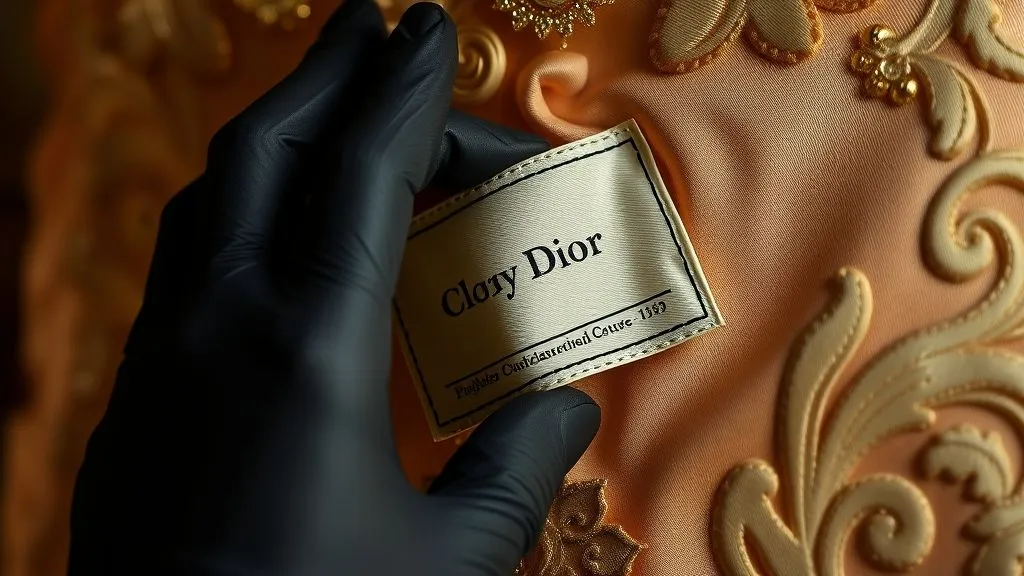
Authenticating the designer label is the foundational step. 1950s couture labels were often hand-stitched, sometimes bearing a specific collection number or client name. I always scrutinize the stitching, font, and material of the label, comparing it against known authentic examples from the period. Counterfeits, while less common for couture than for accessories, do exist and can be sophisticated.
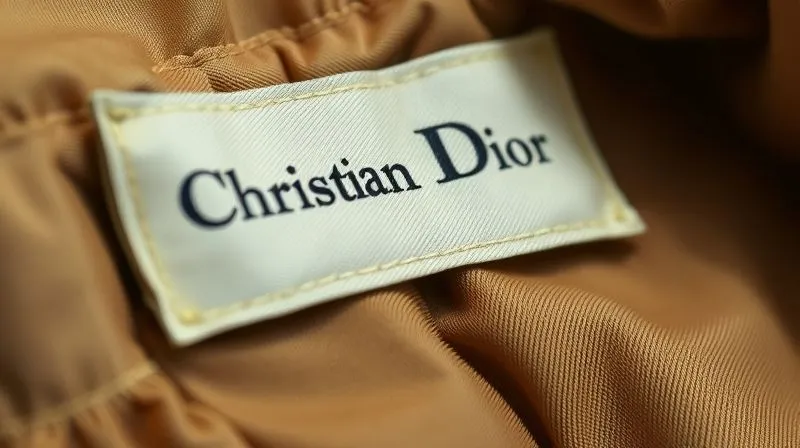
Understanding the evolution of a designer's label through the 1950s is also crucial. For instance, Chanel's labels changed subtly over the decade, as did Balenciaga's. Knowing these nuances helps you accurately date the garment and verify its origin.
Documentation and Chain of Ownership
Beyond the label, look for any accompanying documentation. Original sales receipts, tailor's notes, fashion magazine features, or even personal letters from the original owner can provide invaluable provenance. These documents not only verify authenticity but also add a compelling narrative, significantly enhancing resale value.
I once appraised a stunning Jacques Fath gown that came with a handwritten diary entry from its original owner, detailing the occasion she wore it to a Parisian ball. That personal touch elevated its story and its market appeal immensely. Always ask sellers for any available history or documentation.
Condition Assessment: The Unsung Hero of Valuation
A garment's condition is a direct determinant of its resale value. Even the rarest piece of couture can see its value plummet if it's in poor shape. Unlike a painting that can be restored, textile restoration is incredibly delicate and costly, often impacting originality.
Examining Fabric Integrity and Construction
I meticulously examine every inch of the fabric for signs of wear, tears, stains, fading, or insect damage. Pay close attention to stress points like armholes, seams, and closures. Are all original buttons, zippers, and fastenings present and functional? The integrity of the original construction is paramount.
For 1950s couture, the internal construction – boning, interlinings, exquisite hand-finishing – is as important as the exterior. Any compromise to these elements can indicate significant issues or unprofessional repairs.
Assessing Alterations and Repairs
Originality is key. Any alterations, even if professionally done, can reduce value, especially if they significantly change the garment's original silhouette or fit. Repairs should be period-appropriate and minimally invasive. A discreet, expert repair is far less damaging to value than a crude, obvious one.
Here's a general guide I use for condition grading and its impact on value:
| Condition Grade | Description | Value Impact |
|---|---|---|
| Mint | As new, unworn, stored perfectly, original tags often present. | Highest, commands top market prices. |
| Excellent | Minor, almost invisible flaws; wearable and structurally sound. | High, very desirable for collectors and wearers. |
| Very Good | Some minor visible flaws (e.g., small stain, loose stitch), repairable. | Moderate to High, still very collectible. |
| Good | Wearable with noticeable flaws (e.g., fading, small holes); needs repair or restoration. | Low to Moderate, often for display or extensive restoration. |
| Fair/Poor | Significant damage, large tears, extensive staining; collectors/display only, not wearable. | Significantly Reduced, primarily for textile study or pattern recreation. |
Authenticity and Construction: Beyond the Label
While labels offer a starting point, true 1950s couture authentication goes much deeper. It involves a forensic examination of the garment's construction, techniques, and materials, which often reveal the hand of a master artisan.
Identifying Hand-Finishing and Couture Techniques
1950s haute couture was almost entirely hand-sewn. Look for evidence of hand-rolled hems, hand-set zippers, meticulously hand-finished buttonholes, and the absence of machine overlocking. Linings are often silk or fine rayon, expertly fitted and hand-stitched. The internal structure, like boning or horsehair interlining, should be precise and robust, designed to give the garment its iconic silhouette.
I've noticed that even seemingly minor details, like the type of hook-and-eye closures or the specific method of attaching a sleeve, can be tell-tale signs of a particular atelier's work. These details, though subtle, are critical for accurately appraising rare 1950s couture for resale value.
Fabric Quality and Period-Specific Materials
The fabrics used in 1950s couture were exquisite: heavy silks, luxurious brocades, fine wools, and innovative synthetics like nylon in its early forms. The quality of these materials is often superior to modern equivalents. Understand the typical fabrics favored by specific designers and the general textile trends of the decade.
For example, a Balenciaga gown might feature a unique, stiff gazar silk, while a Chanel suit would be instantly recognizable by its signature tweed. Familiarity with these materials helps confirm authenticity and contributes to the overall valuation.
Market Research: Understanding Supply, Demand, and Trends
Even with perfect provenance and condition, a garment's value is ultimately determined by the market. Understanding current demand, recent sales, and emerging trends is indispensable for an accurate appraisal.
Analyzing Auction Results and Sales Data
One of my primary tools is examining past auction results from reputable houses like Christie's and Sotheby's. These provide concrete data on what similar pieces have sold for. Look for garments by the same designer, from the same era, and in comparable condition. Websites like Christie's and Sotheby's often have extensive archives of past sales, complete with descriptions and hammer prices.
Remember that auction prices reflect not just the intrinsic value but also buyer enthusiasm and the specific context of the sale. However, they offer the best benchmark for high-end vintage couture.
Identifying Desirable Designers and Silhouettes
Certain designers and silhouettes consistently command higher prices. Christian Dior's 'New Look' creations, Balenciaga's sculptural masterpieces, and early Chanel tweed suits are perennial favorites. The market also has cyclical trends; what was highly sought after five years ago might have plateaued, while another designer gains traction.
Staying informed on fashion history and exhibitions, such as those at the Victoria and Albert Museum, can provide insights into what's currently considered historically significant and desirable. This knowledge is crucial for accurately appraising rare 1950s couture for resale value.
Case Study: The "New Look" Gown's Resurgence
Case Study: The "New Look" Gown's Resurgence
A few years ago, a client brought me a Christian Dior 'New Look' gown, dating from 1953. It had been stored in an attic for decades, showing some minor discoloration and a few loose stitches. Initially, the client thought it was just an old dress. My appraisal process began with meticulous research into its specific collection, identifying it as a rare example of the 'Tulip Line.' Despite its minor flaws, the market demand for authentic 'New Look' pieces was soaring, fueled by recent museum exhibitions and popular cultural references. After a careful, museum-level cleaning and minimal, period-appropriate repairs, the gown, originally valued by the client at a few thousand dollars, eventually sold at a specialist vintage auction for over $45,000. This outcome was a direct result of understanding its historical significance, meticulous condition assessment, and pinpointing current market desire.
Leveraging Expert Networks and Professional Appraisers
While this guide provides a solid foundation, there are times when an independent, professional appraisal is indispensable, especially for truly rare and high-value pieces. I've found that collaborating with other experts often yields the most accurate and trustworthy valuations.
Finding a Reputable Vintage Couture Appraiser
Look for appraisers who specialize specifically in vintage fashion or haute couture, not just general antiques. They should have a deep understanding of fashion history, textile conservation, and the current vintage market. Membership in professional appraisal associations, like the Appraisers Association of America or the International Society of Appraisers, is a strong indicator of credibility and adherence to ethical standards.
Always ask for their credentials, experience with 1950s couture, and references. A good appraiser will provide a detailed report, outlining their methodology and the basis for their valuation.
The Value of Authentication Services
For extremely high-value pieces, consider third-party authentication services. While not always necessary, a certificate of authenticity from a recognized expert or institution can significantly boost buyer confidence and, consequently, the resale value. These services often involve a panel of experts who rigorously examine the garment.
The Appraisal Process: A Step-by-Step Approach
Here’s the systematic approach I use when conducting an appraisal, ensuring no critical detail is overlooked when you're trying to accurately appraise rare 1950s couture for resale value.
Step-by-Step: Conducting Your Initial Appraisal
- Document Initial Findings: Photograph the garment from all angles, including close-ups of labels, seams, and any damage. Note down all visible details before any handling or cleaning.
- Research Designer and Era: Identify the designer, if possible, and research their work during the 1950s. Understand their signature styles, fabrics, and construction techniques.
- Assess Condition Meticulously: Follow the guidelines in the 'Condition Assessment' section. Be objective and thorough. This is where many amateur appraisals fall short.
- Verify Authenticity: Examine labels, compare construction details to known authentic examples, and look for signs of hand-finishing characteristic of couture.
- Research Market Comparables: Use auction results, reputable dealer archives, and specialized vintage marketplaces to find similar items that have recently sold.
- Consult Experts (If Needed): For challenging pieces, don't hesitate to reach out to a professional appraiser or a curator specializing in 1950s fashion.
- Formulate Preliminary Value: Based on all collected data – provenance, condition, authenticity, and market comparables – establish a realistic resale value range. Be prepared to justify your valuation with evidence.
This structured approach minimizes guesswork and maximizes accuracy, giving you confidence in your valuation. For further guidance on appraisal standards, you might consult resources from professional organizations like the Appraisers Association of America.
Maximizing Resale Value: Presentation and Storytelling
Once you've accurately appraised your rare 1950s couture, the next step is presentation. Even the most valuable piece needs to be presented compellingly to achieve its maximum resale potential.
Photography and Description
High-quality photography is non-negotiable. Invest in professional lighting and a clean background. Capture the garment's silhouette, details, and any unique features. Provide clear, detailed descriptions that highlight its designer, era, materials, construction, and condition. Be transparent about any flaws, as honesty builds trust.
A well-written description that captures the essence of the garment and its historical context can significantly enhance its appeal to potential buyers. Think of it as painting a picture with words.
Crafting the Narrative
The story behind the garment is a powerful selling tool. If you have provenance, share it! Who wore it? What was the occasion? What makes this piece unique? A compelling narrative transforms a beautiful dress into a piece of living history, which resonates deeply with collectors and enthusiasts. This emotional connection can often justify a higher price point.
Frequently Asked Questions (FAQ)
Q: How do I distinguish between high-end ready-to-wear and couture from the 1950s? A: 1950s couture pieces are typically one-of-a-kind, custom-made for a specific client, and feature extensive hand-finishing, unique internal structures (like built-in corsetry or complex boning), and the highest quality materials. Ready-to-wear, even high-end, was mass-produced (though in smaller quantities than today), often with more machine-stitching and standardized sizing. The presence of a numbered label, a client name, or specific couture house markings is a strong indicator of true couture.
Q: What impact does a garment's size have on its resale value? A: While condition and designer are usually more critical, size can impact marketability. Smaller sizes (equivalent to modern US 0-4) tend to be more in demand, as many vintage garments are quite petite. However, a rare, highly desirable piece will still command a premium regardless of size, as collectors often value historical significance over wearability. Larger sizes are rarer in vintage couture and can sometimes fetch good prices from specific collectors.
Q: Are repairs always detrimental to value, or can some be acceptable? A: Repairs are generally viewed as detrimental to original value. However, professionally executed, period-appropriate, and discreet repairs that maintain the garment's integrity and original appearance are far more acceptable than crude, visible alterations. Museum-quality conservation is often necessary for significant pieces and is done to stabilize, not necessarily to restore to 'new' condition. Transparency about all repairs is vital.
Q: How important is the original packaging or accessories? A: For 1950s couture, original packaging (like a designer box or garment bag) is extremely rare but can add significant value, especially if it's in excellent condition and directly linked to the garment. Original accessories, such as matching gloves, hats, or belts, are highly desirable. They complete the original look and can substantially increase the garment's overall value and appeal.
Q: What are common pitfalls when trying to appraise 1950s couture myself? A: Common pitfalls include underestimating the importance of provenance, failing to identify subtle authenticity markers, misjudging condition (especially minor flaws that can be costly to fix), and lacking current market knowledge. Over-reliance on online photos without physical inspection is also a major risk. An accurate appraisal requires patience, research, and a keen eye for detail honed by experience.
Key Takeaways and Final Thoughts
- Provenance is Power: Always seek out and document a garment's history and chain of ownership.
- Condition is King: Meticulously assess every detail of the garment's physical state, including internal construction.
- Authenticity Beyond Labels: Understand the unique hand-finishing and construction techniques of 1950s couture houses.
- Market Matters: Stay informed on current auction results, desirable designers, and trending silhouettes.
- Expert Collaboration: Don't hesitate to consult professional appraisers for truly valuable or challenging pieces.
- Presentation is Key: High-quality photography and a compelling narrative maximize resale potential.
Accurately appraising rare 1950s couture for resale value is an art and a science, demanding a blend of historical knowledge, keen observation, and market savvy. By following these expert frameworks and actionable steps, you're not just valuing a garment; you're honoring a piece of fashion history and ensuring it finds its rightful place in the hands of a new custodian. Approach each piece with respect and diligence, and you'll unlock its true worth, every time.
Recommended Reading
- Scaling Vintage: 7 Strategies to Preserve Authenticity & Grow Your Brand
- 5 Proven Ways to Slash Eyewear Returns: A Guide for Optical Retailers
- Scaling Unique Handcrafted Jewelry: 7 Proven Strategies for Growth
- 7 Essential Checks: Identify Truly Durable Classic Menswear for Retail
- 5 Steps: Quickly Choose Professional Outfits from Your Capsule Wardrobe?

Your email address will not be published. Required fields are marked *