

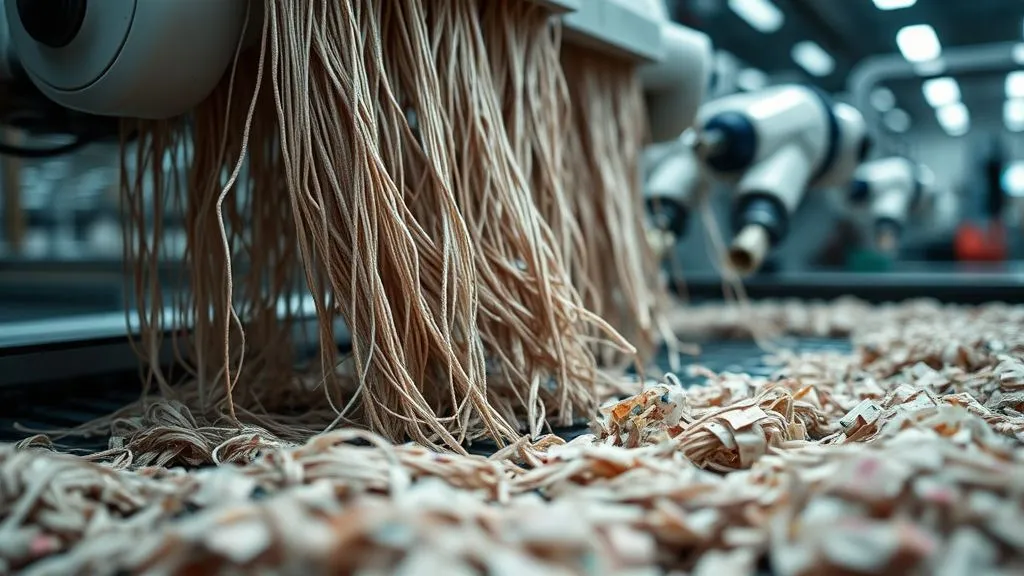
What's the Solution for Recycling Mixed Synthetic Fiber Blends?
For over two decades in the textile innovation space, I've witnessed firsthand the incredible advancements in fiber technology, creating materials that are durable, versatile, and high-performing. Yet, I've also seen a persistent and formidable challenge grow alongside this innovation: the sheer complexity of recycling these very materials, especially when they're blended.
The problem is profound. Our wardrobes are increasingly filled with garments made from intricate combinations of polyester, nylon, spandex, cotton, and other fibers. While these blends offer comfort and functionality, they become a recycling nightmare, often destined for landfills or incineration due to the difficulty of separating their constituent polymers.
Today, I want to unpack this critical issue and provide a definitive answer to the question: What's the solution for recycling mixed synthetic fiber blends? We'll explore groundbreaking technologies, strategic frameworks, and collaborative approaches that are not just theoretical but are actively shaping the future of textile circularity. My goal is to equip you with actionable insights and a clear understanding of the pathways to a truly sustainable textile economy.
The Intricacies of Mixed Fiber Blends: Why It's So Hard
Before we dive into solutions, it's crucial to understand the depth of the problem. When we talk about mixed synthetic fiber blends, we're not just discussing a simple combination; we're talking about a tangled web of chemically distinct polymers, often woven or knitted together at a microscopic level. This inherent complexity makes traditional recycling methods largely ineffective.
Consider a common blend like polyester-cotton or polyester-spandex. Polyester is a thermoplastic, while cotton is a natural cellulosic fiber. Spandex (elastane) is an elastomeric polyurethane. Each has different melting points, chemical structures, and degradation behaviors. Attempting to mechanically shred and re-extrude such a blend typically results in a degraded, inferior material with compromised performance, making it unsuitable for high-value applications.
"The Achilles' heel of textile recycling has long been the mixed fiber blend. It's akin to trying to separate salt from pepper after they've been cooked into a stew; the individual components are still there, but their intrinsic properties have become intertwined, demanding entirely new separation methodologies."
The challenges extend beyond simple chemical incompatibility. Dyes, finishes, coatings, and accessories (zippers, buttons, labels) further complicate the process, often containing substances that are difficult to remove or can contaminate recycled streams. This intricate matrix is why less than 1% of clothing is recycled into new clothing, according to the Ellen MacArthur Foundation, a statistic I find both alarming and a powerful call to action.
Revolutionizing Sorting: The First Critical Step
No matter how advanced our recycling processes become, they are fundamentally limited by the quality of the input material. For mixed synthetic fiber blends, accurate and efficient sorting is not just important; it's the absolute cornerstone of any viable recycling solution. This isn't your grandmother's rag sorting; this is precision engineering.
Advanced Optical and Hyperspectral Sorting
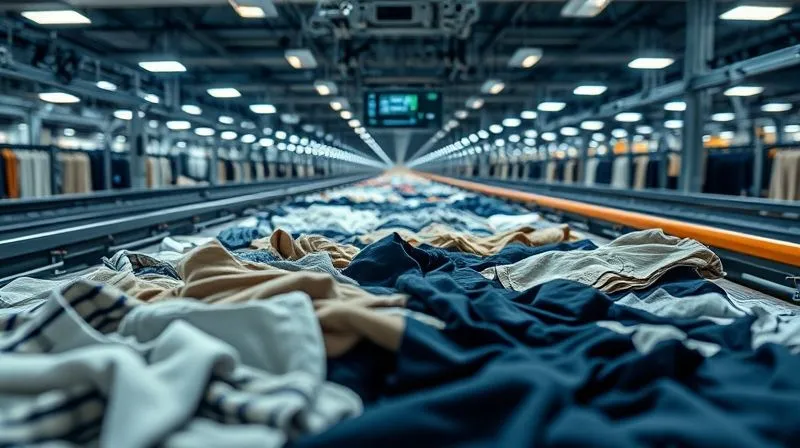
In my experience, the most significant leap in sorting technology has come from the integration of advanced optics and hyperspectral imaging. These systems can 'see' beyond the visible spectrum, identifying the chemical composition of fibers based on how they reflect or absorb light at different wavelengths. They can differentiate between polyester, nylon, acrylic, and even various types of cotton, all at high speeds.
Imagine a conveyor belt moving at several meters per second. Overhead sensors scan each textile piece, generating a unique spectral fingerprint. This data is then processed in real-time, and air jets precisely eject items into designated bins based on their identified fiber composition. This level of automation and accuracy is game-changing for tackling mixed blends.
AI and Machine Learning in Fiber Identification
The power of these optical systems is amplified exponentially when combined with Artificial Intelligence (AI) and Machine Learning (ML). AI algorithms can be trained on vast datasets of textile compositions, allowing them to identify complex blends, recognize dyes, and even detect finishes that might otherwise hinder recycling.
This AI-driven approach enhances accuracy, reduces human error, and allows for continuous improvement of sorting efficiency. As more data is fed into the system, its ability to classify even the most challenging mixed synthetic fiber blends improves, making the downstream recycling processes far more effective. This is where the real intelligence of the solution begins.
| Sorting Method | Pros | Cons |
|---|---|---|
| Manual Sorting | Cost-effective for small batches | Slow, error-prone, limited by human knowledge |
| Optical/NIR Sorting | High-speed, identifies single fibers | Struggles with complex blends, dyes |
| Hyperspectral Imaging + AI | High accuracy, identifies complex blends & dyes, scalable | High initial investment, requires calibration |
| X-Ray Fluorescence (XRF) | Identifies heavy metals, some fiber types | Limited fiber identification, safety concerns |
Mechanical Recycling: Pushing the Boundaries
Mechanical recycling, the oldest form of textile recycling, involves shredding fabrics into fibers and then re-spinning them. While highly effective for mono-material waste like 100% cotton or 100% polyester, its application for mixed synthetic fiber blends has historically been limited due to the resulting degradation of material quality.
Enhanced Mechanical Processes for Specific Blends
However, recent innovations are pushing the boundaries of mechanical recycling for blends. For specific, less complex blends (e.g., polyester-cotton where the cotton percentage is low), new shredding and carding technologies are being developed that minimize fiber damage. The key here is not perfect separation, but rather creating a new blended yarn with acceptable performance for specific applications, like insulation or non-woven materials.
The focus is on maintaining as much fiber length and integrity as possible, often involving specialized cutting and opening techniques that are gentler than traditional shredding. This allows for a 'downcycling' into products that still offer significant environmental benefits compared to virgin material production, even if not textile-to-textile.
Case Study: RecycTex Innovations
RecycTex Innovations, a fictional but realistic startup, faced the challenge of mechanically recycling discarded workwear, often a blend of 65% polyester and 35% cotton. Traditional methods yielded short, weak fibers only suitable for insulation. By investing in a proprietary low-impact shredding and air-classification system, they managed to separate a significant portion of the polyester and cotton fibers with minimal damage. The resulting polyester fibers were long enough to be blended with a small amount of virgin polyester and re-spun into a durable yarn for industrial wipes, while the cotton was used in paper manufacturing. This approach, while not full textile-to-textile, diverted thousands of tons from landfills and created new value streams, demonstrating the potential of targeted mechanical processes for specific mixed synthetic fiber blends.
Chemical Recycling: The Game Changer for Complex Blends
This is where the real excitement lies for answering 'What's the solution for recycling mixed synthetic fiber blends?' Chemical recycling offers the potential for true textile-to-textile circularity by breaking down complex polymers into their original monomers or oligomers, which can then be repolymerized into virgin-quality fibers. This bypasses the quality degradation issues inherent in mechanical recycling for blends.
Depolymerization Technologies (Polyester, Polyamide)
For polyester (PET), technologies like glycolysis, methanolysis, and hydrolysis are proving highly effective. These processes use chemical reagents to break down the PET polymer chain, separating it from other fibers in a blend and yielding pure terephthalic acid (TPA) and ethylene glycol (EG) – the building blocks of new polyester.
- Collection & Pre-treatment: Mixed synthetic fiber blends are collected, sorted (as discussed), and then cut into smaller pieces.
- Fiber Separation & Dissolution: The polyester component is selectively dissolved or depolymerized using specific solvents or chemical reagents, leaving other fibers (like cotton or spandex) largely untouched.
- Purification: The resulting monomers or oligomers are then purified to remove dyes, finishes, and contaminants.
- Repolymerization: The purified monomers are then used to synthesize new, virgin-quality polyester fibers, closing the loop.
Similarly, for polyamide (nylon), depolymerization methods like aminolysis or hydrolysis can recover caprolactam or other monomers, which can then be re-spun into new nylon fibers. This is particularly promising for blends containing nylon and other synthetics.
Solvolysis and Hydrolysis for Mixed Fibers
A key advantage of chemical recycling for mixed synthetic fiber blends is the ability to selectively target and dissolve one component while leaving others intact. For example, some solvolysis processes can dissolve polyester, allowing the recovery of cotton or other cellulosic fibers separately. This yields two valuable streams from a single blended input.
Hydrolysis, using water and heat under pressure, can also be employed to break down specific polymers. The beauty of these methods is their potential to handle highly contaminated or heavily dyed materials, as the purification steps are designed to remove these impurities, resulting in a clean output suitable for high-end applications.
Enzymatic and Biological Approaches: Nature's Solution
While chemical recycling offers robust solutions, the emerging field of enzymatic and biological recycling presents an intriguing, often greener, alternative for mixed synthetic fiber blends. This approach harnesses the power of microorganisms or isolated enzymes to selectively break down specific polymers.
Enzyme-Assisted Fiber Separation
For blends like polyester-cotton, enzymes can be engineered to specifically target and degrade the cellulose in cotton, leaving the polyester intact. This allows for the separation and recovery of high-quality polyester fibers, while the degraded cotton can potentially be used in other applications or composted. Conversely, other enzymes are being developed to target polyester, leaving cellulosic fibers behind.
This method offers several benefits: it typically operates at lower temperatures and pressures than chemical recycling, reducing energy consumption. It also often uses water-based systems, minimizing the need for harsh chemicals. While still largely in the research and development phase, enzymatic recycling holds immense promise for a more environmentally benign solution for mixed synthetic fiber blends, especially as enzyme specificity and efficiency improve.
Design for Circularity: Preventing the Problem at the Source
Ultimately, the most effective solution to recycling mixed synthetic fiber blends is to design them with their end-of-life in mind. As an industry specialist, I've consistently advocated for a 'design for circularity' (DfC) approach, which considers recyclability from the very first sketch.
Mono-Material Design and Smart Blends
One of the simplest yet most impactful DfC principles is to move towards mono-material design wherever possible. If a garment can be made from 100% polyester or 100% cotton without compromising performance, it dramatically simplifies recycling. For cases where blends are essential for functionality (e.g., stretch, durability), the focus shifts to 'smart blends' – combinations of fibers that are known to be compatible with existing or emerging recycling technologies.
"The future of sustainable fashion isn't just about what we do with waste; it's about eliminating waste in the first place through intelligent design. A garment that cannot be recycled is a design failure, not merely a recycling challenge."
This includes avoiding complex blends where different polymers are inseparable, minimizing the use of non-recyclable trims and accessories, and selecting dyes and finishes that are compatible with recycling processes. Brands like Patagonia and Stella McCartney have been pioneers in this space, demonstrating that high-performance, desirable products can be created with circularity in mind.
To truly address what's the solution for recycling mixed synthetic fiber blends, we must look upstream. According to a report by McKinsey & Company, shifting to circular business models could unlock significant value and reduce environmental impact across the fashion industry. This means brands need to collaborate closely with recyclers and material scientists during the design phase, not just at the end of a product's life.
Policy, Infrastructure, and Collaboration: Building a Circular Ecosystem
Technological solutions alone are not enough. A robust circular economy for textiles, especially for mixed synthetic fiber blends, requires supportive policy, significant infrastructure investment, and unprecedented industry-wide collaboration. This is a systemic challenge demanding a systemic response.
Government Initiatives and Extended Producer Responsibility (EPR)
Governments have a critical role to play in incentivizing circular practices. Extended Producer Responsibility (EPR) schemes, where brands are financially responsible for the end-of-life management of their products, are gaining traction. These policies can drive brands to design more recyclable products and invest in the necessary collection and recycling infrastructure.
For example, France has implemented an EPR scheme for textiles, requiring brands to contribute to a fund that supports textile collection, sorting, and recycling. Similar initiatives are emerging across the EU and in other regions, creating a crucial framework for scaling up solutions for mixed synthetic fiber blends.
Industry Partnerships and Open Innovation
The complexity of mixed fiber recycling demands collaboration across the entire value chain. No single company has all the answers or resources. I've seen successful partnerships emerge between brands, recyclers, technology developers, and even chemical companies. These collaborations facilitate knowledge sharing, co-investment in new infrastructure, and standardization of materials and processes.
Open innovation platforms, where companies share research and development findings on textile recycling, can accelerate progress. Organizations like the Fashion for Good initiative exemplify this, bringing together diverse stakeholders to tackle systemic challenges like mixed fiber waste. This collaborative spirit is essential if we are to truly answer what's the solution for recycling mixed synthetic fiber blends at scale.
Navigating the Economic Realities and Scaling Challenges
While the technical solutions are becoming clearer, scaling them up to an industrial level and making them economically viable remains a significant hurdle. Investment in new recycling facilities, especially for chemical recycling, is substantial, and the cost of recycled materials must be competitive with virgin alternatives.
Investment in R&D and Infrastructure
To bridge the gap between pilot projects and full-scale operations, significant private and public investment is required. This includes funding for continued research and development to optimize processes, reduce costs, and handle a wider array of mixed synthetic fiber blends. It also means building the large-scale industrial facilities needed to process the vast quantities of textile waste generated globally.
Early-stage investments are crucial for proving the economic viability and environmental benefits of these advanced recycling technologies, attracting further capital and accelerating their adoption across the industry.
Consumer Awareness and Demand for Recycled Content
Ultimately, the success of these solutions hinges on consumer demand. As consumers, our choices send powerful signals to brands. Increasing awareness about the environmental impact of textile waste and the benefits of recycled content can drive market demand for products made from recycled mixed synthetic fiber blends.
Brands, in turn, need to clearly communicate the circularity of their products, educating consumers about how their clothing can be recycled and encouraging participation in take-back schemes. This creates a virtuous cycle where demand fuels investment, which in turn improves the accessibility and affordability of recycled materials.
Frequently Asked Questions (FAQ)
Q: Why is recycling mixed fiber blends significantly harder than recycling single-fiber textiles? A: Mixed fiber blends, like polyester-cotton or nylon-spandex, combine chemically distinct polymers with different properties (e.g., melting points, solubilities). Traditional mechanical recycling often degrades the material, while chemical recycling requires selective separation of these intertwined components, which is a complex technical challenge.
Q: What are the main types of chemical recycling used for synthetic blends, and how do they work? A: The primary types are depolymerization (breaking down polymers into monomers, like for PET or nylon) and solvolysis/hydrolysis (using solvents or water under pressure to selectively dissolve or break down one fiber component while leaving others intact). These methods aim to recover virgin-quality raw materials.
Q: How can consumers contribute to better textile recycling, especially for their blended garments? A: Consumers can contribute by donating clothes to reputable textile take-back programs (many brands now offer these), supporting brands committed to circular design, reducing consumption, and choosing mono-material garments when possible. Proper sorting at home and avoiding placing textiles in general waste is also crucial.
Q: What role do fashion brands play in solving the problem of recycling mixed synthetic fiber blends? A: Brands have a pivotal role in 'design for circularity,' creating garments that are easier to recycle. They can also invest in recycling infrastructure, implement take-back schemes, use recycled content in new products, and advocate for supportive policies like Extended Producer Responsibility (EPR).
Q: Is recycling mixed synthetic fibers economically viable compared to using virgin materials? A: Currently, advanced recycling of mixed synthetic fiber blends often incurs higher costs than producing virgin materials, largely due to R&D, infrastructure investment, and process optimization. However, as technologies scale, efficiencies improve, and carbon pricing/policy incentives increase, the economic viability is rapidly improving, making it increasingly competitive.
Key Takeaways and Final Thoughts
The journey to truly circular textiles, especially for mixed synthetic fiber blends, is undeniably complex, but the solutions are rapidly emerging. As an industry veteran, I've never been more optimistic about our ability to transform textile waste into valuable resources.
- Advanced Sorting is Paramount: High-tech optical, hyperspectral, and AI-driven sorting are foundational for separating complex blends.
- Chemical Recycling is a Game Changer: Depolymerization and solvolysis offer the highest potential for textile-to-textile recycling of blends.
- Design for Circularity is Essential: Brands must design products with end-of-life in mind, prioritizing mono-materials or 'smart blends'.
- Collaboration & Policy Drive Scale: Industry partnerships, government incentives, and EPR schemes are crucial for building the necessary ecosystem.
- Consumer Demand Fuels Innovation: Informed consumer choices empower brands to invest in sustainable solutions.
We are moving beyond the question of 'if' we can recycle mixed synthetic fiber blends to 'how' we scale these solutions effectively and economically. The convergence of technological innovation, strategic design, and collaborative action is paving the way for a future where textile waste is a relic of the past, and circularity is the new standard. It's an exciting time to be part of this transformation, and I encourage you to contribute to this vital shift, whether as a designer, manufacturer, policymaker, or conscious consumer. The future of fashion depends on it. Discover more about circular economy principles at the Ellen MacArthur Foundation and delve into policy insights from the European Commission on Circular Economy. For cutting-edge textile innovation, I often refer to reports from organizations like McKinsey & Company's State of Fashion reports.
Recommended Reading
- Beyond Sales: 7 Key Metrics to Measure Digital Fashion ROI Accurately
- Unlock the Secret: How to Pick the Perfect Activewear Size for Growing Kids
- Unlock Profit: 7 Strategies for Sourcing Unique Gift Accessories
- Ultimate Guide: Best Men's Wallet Styles For Minimalist Carry
- 7 Steps to Master Custom Jewelry Revisions & Boost Profit



Your email address will not be published. Required fields are marked *