

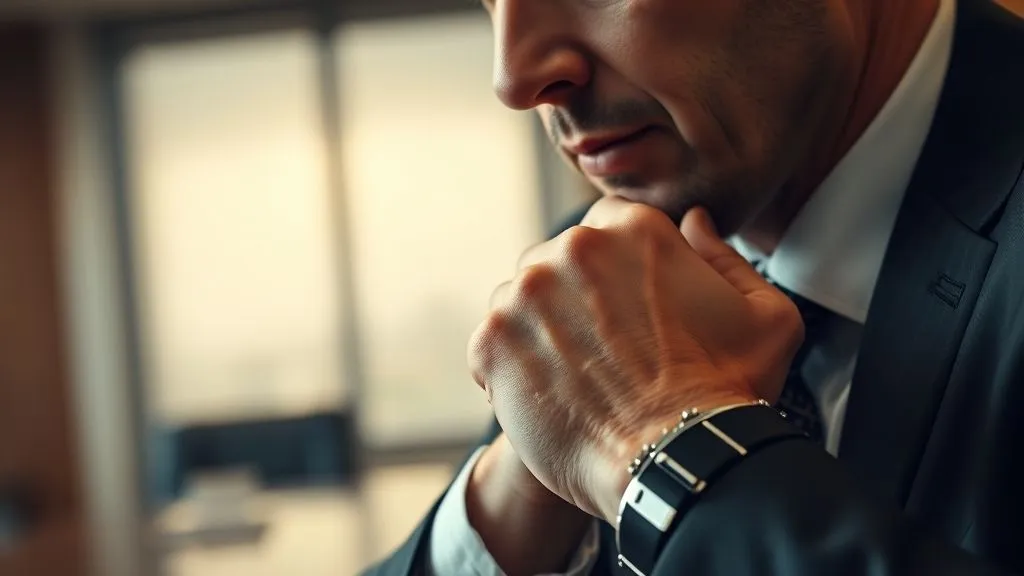
What mens accessories subtly diminish trust in high-stakes meetings?
For over two decades in the demanding world of executive fashion and personal branding, I've witnessed countless professionals inadvertently undermine their own gravitas. It's rarely a grand misstep; more often, it's a subtle discord, a quiet sartorial miscalculation that speaks volumes before a single word is uttered. In high-stakes environments, where every gesture and detail is subconsciously scrutinized, your accessories aren't just adornments – they're powerful non-verbal communicators.
The problem isn't that these accessories are inherently 'bad'; it's that they send unintended signals. A flashy watch might scream 'wealth' but whisper 'recklessness.' A casual bracelet could imply 'approachability' but also 'lack of seriousness.' In a room full of decision-makers, where trust is the ultimate currency, these subtle signals can erode confidence and diminish your perceived credibility, sometimes costing you the very deal or opportunity you're striving for.
This article isn't about rigid rules or stifling personal style. Instead, I'll draw upon my extensive experience to dissect the psychology behind these accessory choices. We'll explore specific examples of what mens accessories subtly diminish trust in high-stakes meetings, why they do, and, most importantly, provide you with actionable frameworks and expert insights to curate an image that consistently projects authority, competence, and unwavering trustworthiness. Prepare to master the silent language of executive presence.
The Psychology of First Impressions: Why Every Detail Matters
Before a word is spoken, before a handshake is exchanged, your appearance has already initiated a complex psychological process in the minds of those you meet. This isn't vanity; it's fundamental human wiring. Our brains are hardwired to make rapid judgments based on visual cues, and in a high-stakes meeting, those judgments can dictate the entire dynamic.
“You never get a second chance to make a first impression. And in business, that first impression can be the difference between a handshake and a closed door.” – Anonymous Business Axiom
According to a study published in the journal Personality and Social Psychology Bulletin, judgments of trustworthiness can be made in as little as 33 milliseconds. While this initial 'snap judgment' is often based on facial features, subsequent assessments are heavily influenced by attire and presentation. Your accessories, therefore, become critical extensions of your professional narrative, either reinforcing your desired image or inadvertently detracting from it. They are the silent arbiters of your perceived professionalism and attention to detail. Harvard Business Review often emphasizes the importance of non-verbal cues in executive communication, underscoring that every visual element contributes to your overall message.
Timepieces That Tell the Wrong Story
A watch is more than a time-telling device; it's a statement. In a high-stakes meeting, the right watch can exude gravitas and precision, while the wrong one can subtly diminish trust.
Overly Flashy vs. Overly Casual
I've seen executives walk into crucial negotiations with watches that gleam a little too brightly, or, conversely, those that belong on a weekend hike. An overtly flashy watch, particularly one dripping with excessive diamonds or an ostentatious brand logo, can inadvertently communicate a lack of seriousness or an emphasis on superficiality over substance. It can suggest a 'show-off' mentality rather than a focus on the business at hand. On the other end of the spectrum, a rugged sports watch, a smartwatch with a brightly colored band, or anything clearly designed for leisure activities can imply a casualness that is out of place in a formal, high-pressure environment. It signals that your mind might be elsewhere, perhaps on your next workout or weekend adventure, rather than fully engaged in the present discussion.
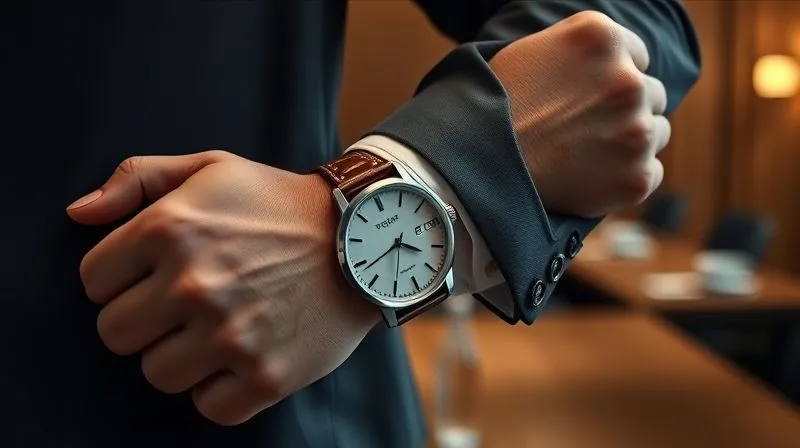
Actionable Steps: Selecting Your Meeting Watch
- Choose Classic Elegance: Opt for a dress watch with a leather strap (black or brown, matching your belt and shoes) or a simple, elegant metal bracelet (stainless steel or gold, not overly ornate).
- Prioritize Understatement: The watch should be sophisticated but not attention-grabbing. Its value should be evident in its craftsmanship, not its bling.
- Consider Size: Ensure the watch case is proportionate to your wrist and slides comfortably under your shirt cuff. Overly large or chunky watches can appear cumbersome.
- Functionality Over Fashion: While style is key, ensure the watch is practical and doesn't require constant fiddling or checking, which can be distracting.
The Cufflink Conundrum: When Elegance Becomes Distraction
Cufflinks are a hallmark of formal dressing, a subtle touch of refinement. However, like watches, they carry a silent message that can be misinterpreted in a high-stakes setting.
Novelty vs. Classic: The Line of Professionalism
While novelty cufflinks (think cartoon characters, sports logos, or whimsical designs) might be charming at a social event, they are a significant misstep in a professional context. They immediately signal a lack of seriousness, a playful demeanor that can undermine your perceived authority. In a meeting where you're discussing multi-million dollar deals or critical strategic decisions, a pair of Superman cufflinks can subtly diminish trust, making you appear less mature or less committed to the gravity of the situation. The goal is to project unwavering professionalism, not a quirky personality.
Case Study: How a CEO's Cufflinks Cost a Deal
Mr. Harrison, a CEO known for his unconventional style, once entered a crucial M&A negotiation wearing a pair of intricately designed steampunk-themed cufflinks. While unique, they were a stark contrast to the conservative attire of the opposing board. During a break, an advisor from the other side commented, "He seems more interested in his accessories than the balance sheet." Though an exaggeration, the subtle impression of a lack of gravitas lingered. The deal ultimately fell through, and while many factors were at play, Mr. Harrison later reflected that his accessories might have inadvertently contributed to an initial perception of unseriousness, making it harder to establish the deep trust required for such a high-value transaction.
Rings and Bracelets: The Fine Line Between Personal Style and Professionalism
Personal jewelry, particularly rings and bracelets, can be deeply meaningful. However, in a professional setting, an excess or inappropriate choice can send unintended signals.
Too Many, Too Chunky, or Too Informal
While a wedding band is universally accepted and often seen as a sign of stability, additional rings, especially multiple chunky or ornate ones, can be distracting. They can suggest an overly flamboyant personality or a preoccupation with personal adornment rather than professional focus. Similarly, bracelets – whether leather, beaded, or overly metallic – tend to lean towards casual or bohemian aesthetics. In a high-stakes meeting, a visible bracelet, particularly one that clinks or catches the light, can be a visual and even auditory distraction, subtly diminishing your perceived seriousness and attention to detail. The key is minimalism and appropriateness.
| Accessory Type | Acceptable in High-Stakes Meetings | To Avoid in High-Stakes Meetings |
|---|---|---|
| Rings | Single wedding band, simple signet ring (if traditional/subtle) | Multiple rings, large/chunky rings, novelty rings, rings with excessive gemstones |
| Bracelets | Generally none, or extremely subtle, flat metal worn under cuff | Leather bracelets, beaded bracelets, chunky metal bracelets, smartwatches with bright bands, anything that clinks or is overtly visible |
Belts and Shoes: The Foundation of Your Professional Persona
Often overlooked, your belt and shoes form the base of your professional presentation. Any dissonance here can subtly diminish trust, signaling a lack of attention to fundamental details.
Mismatched, Worn, or Overly Trendy
A worn-out pair of shoes, scuffed and untended, speaks volumes about your attention to detail – or lack thereof. Similarly, a belt that is mismatched in color or material with your shoes creates a jarring visual break. In a high-stakes meeting, these seemingly minor details can subconsciously suggest a lack of thoroughness or an inability to manage even the basics. Overly trendy shoes, like sneakers or brightly colored loafers, also send a conflicting message, implying a casualness that undermines the formality of the situation. Your footwear and belt should be an extension of your overall polished image, not a point of distraction.
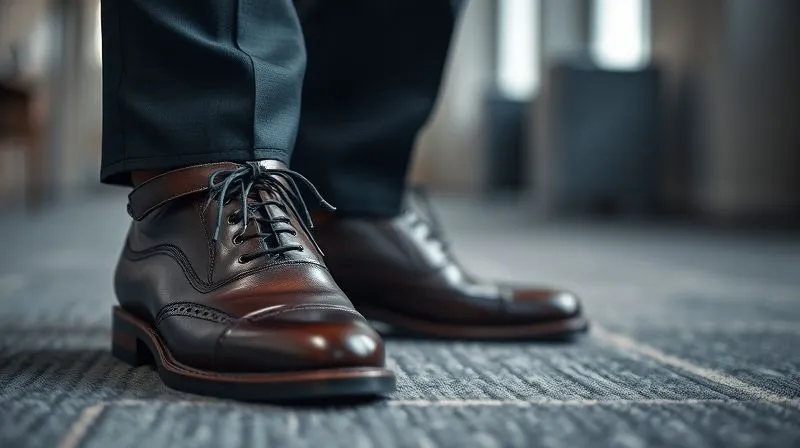
Actionable Steps: Belt and Shoe Harmony
- Match Colors Precisely: Your belt and shoes should always be the same color (black with black, brown with brown).
- Match Materials: Ideally, the material and finish should also be similar (e.g., polished leather shoes with a polished leather belt).
- Maintain Impeccably: Keep your shoes polished and in excellent condition. Replace worn-out belts.
- Choose Classic Styles: Stick to classic dress shoe styles (oxfords, derbies, loafers) and a simple, elegant leather belt. Avoid overly large buckles or intricate designs.
Tie Pins, Pocket Squares, and Lapel Pins: Mastering the Subtle Statement
These small additions can elevate an outfit, but they also have the power to detract if chosen poorly. They are the ultimate 'subtle' accessories, making their impact often felt subconsciously.
Clutter vs. Refinement
The goal with these items is refinement, not distraction. A tie pin should be understated, securing your tie neatly without drawing undue attention to itself. An overly large, flashy, or novelty tie pin can feel ostentatious. Similarly, a pocket square should complement, not dominate, your suit. A chaotic pattern, an overly vibrant color that clashes, or a complex fold that looks like a crumpled tissue can make you appear disorganized or trying too hard. Lapel pins, while sometimes used to signify affiliations, should be minimal and discreet. Too many, or overly large, pins create visual clutter and can make you seem less focused on the meeting's purpose and more on personal display. The art is in the subtle touch, adding a layer of polish without screaming for attention.
Eyewear: Clarity, Authority, or Casual Disregard?
Your eyeglasses are a permanent fixture on your face and thus play a critical role in your perceived image. They frame your eyes, the windows to your intellect and sincerity.
Frame Choices and Cleanliness
Chunky, brightly colored, or overly trendy frames can be distracting and may subtly diminish trust by conveying a less serious or more fashion-forward (rather than business-forward) persona. Conversely, thin, classic metal or subtle acetate frames in neutral colors (black, brown, tortoise, silver, gold) project professionalism and intellectual acuity. More importantly, dirty or smudged lenses are an immediate red flag. They suggest a lack of attention to personal detail, which can easily translate in the minds of others to a lack of attention to business details. Always ensure your lenses are spotless and your frames are in excellent condition. They should enhance your gaze, not obscure it or distract from it.
Personal Grooming and Fragrance: The Unseen Accessories
While not 'accessories' in the traditional sense, these elements are inextricably linked to your overall presentation and can profoundly impact how trust is built or eroded in high-stakes environments. They are the ultimate subtle communicators.
Hair, Nails, and Scent: The Unspoken Message
An unkempt hairstyle, visible scruff (unless intentionally and perfectly groomed stubble), or untrimmed, dirty fingernails immediately signal a lack of self-care and discipline. In a professional context, this translates to a perceived lack of discipline in business matters. If you can't manage your personal presentation, how can you manage a complex project or a multi-million dollar portfolio? Similarly, an overpowering cologne or aftershave can be a significant distraction and even an irritant. It invades personal space and can make those around you uncomfortable, shifting their focus from your words to the intrusive scent. The goal is to be fresh and clean, not to leave a fragrant trail. These 'unseen accessories' are paramount; they underscore your respect for yourself and, by extension, for those you are meeting.
As an expert in executive presence, I regularly advise clients that these seemingly minor details are often the most impactful. They are the silent signals that reinforce or contradict your verbal message. Neglecting them is akin to meticulously crafting a powerful speech and then delivering it while wearing a clown nose. The message gets lost in the incongruity. Every element of your presentation, from your perfectly tied knot to your impeccably clean nails, contributes to the perception of your competence and trustworthiness. It's about coherence – ensuring that your visual narrative consistently supports your professional ambition.
Frequently Asked Questions (FAQ)
Can I wear a smartwatch to a high-stakes meeting? While smartwatches are ubiquitous, in a high-stakes meeting, they can be distracting. Notifications buzzing or vibrating, or the urge to check them, can break your focus and send a signal of preoccupation. If you must wear one, ensure it's on silent, notifications are off, and ideally, choose a model with a classic face and a leather or subtle metal strap to minimize its casual appearance. However, for maximum credibility, a traditional dress watch is always preferred.
What about religious jewelry? Is that acceptable? Absolutely. Religious jewelry, such as a subtle cross, Star of David, or other faith-based symbols, is generally acceptable and respected. The key is subtlety and appropriateness. A small, understated piece worn under a shirt or a modest chain is fine. Overly large, flashy, or numerous religious pieces might, like any other excessive jewelry, inadvertently become a distraction rather than a revered symbol. The intent is to show respect for your beliefs without drawing undue attention that detracts from the business discussion.
How do I choose the right tie pin or clip? A tie pin or clip should be functional – keeping your tie neatly in place – and understated. Opt for a simple, slim design in a metallic finish (silver, gold, or gunmetal) that complements your suit and other accessories. It should be positioned between the third and fourth buttons of your shirt. Avoid novelty designs, overly ornate clips, or anything that draws excessive attention. Its purpose is to add polish, not to be a focal point.
Should my belt and shoes always match exactly? Yes, generally. For high-stakes business meetings, the expectation is that your belt and shoes are the same color and ideally, the same type of leather and finish. This creates a cohesive and polished look that demonstrates attention to detail. While there can be slight variations in casual wear, in a formal business setting, a precise match is a hallmark of a truly well-dressed professional.
Is it ever okay to wear a backpack to a high-stakes meeting? In nearly all high-stakes corporate settings, a backpack is considered too casual and can subtly diminish trust. It evokes a student or recreational image rather than that of a seasoned professional. Always opt for a sleek leather briefcase, a professional messenger bag, or a folio. These options convey a more serious, organized, and sophisticated demeanor, aligning with the gravity of the meeting.
Key Takeaways and Final Thoughts
- Your accessories are silent communicators: They speak volumes about your attention to detail, discipline, and respect for the situation.
- Understatement is power: In high-stakes meetings, less is often more. Choose classic, subtle pieces that enhance, rather than distract from, your professional image.
- Consistency builds trust: Ensure all elements of your attire, from your watch to your shoes, are cohesive and project a unified message of competence and reliability.
- Focus on the fundamentals: Impeccable grooming, clean lenses, and polished shoes are non-negotiable foundations for building trust and authority.
- The 'why' behind the 'what': Understanding the psychological impact of your choices allows you to make conscious decisions that serve your professional goals.
Ultimately, mastering your accessory choices for high-stakes meetings isn't about conforming to rigid rules; it's about strategic self-presentation. It's about understanding the subtle psychological cues that influence perception and leveraging them to your advantage. By consciously curating your accessories, you're not just dressing for success; you're building a foundation of trust and credibility that will serve you well in every professional endeavor. Embrace these insights, and watch your executive presence elevate to new, impactful heights. Your silent signals will now speak volumes of your unwavering professionalism.
Recommended Reading
- Unlock the Secret: How to Balance Oversized Streetwear for a Perfect Look
- 7 Proven Strategies: Convert Celebrity Red Carpet Style into Luxury Sales Effectively?
- 7 Proven Strategies to Effectively Upsell Premium Progressive Lens Optical Frames
- 7 Ways High Fashion Magazines Balance Print Heritage & Digital Growth
- The Ultimate Guide: How to Care for Anti-Reflective Coating on Glasses





Your email address will not be published. Required fields are marked *