


Unmasking Eco-Chic: How to Verify Genuine Sustainable Luxury Materials for Eco Chic Designs?
For over 15 years in the sustainable fashion industry, I've witnessed a remarkable transformation. What began as a niche interest has blossomed into a powerful movement, with 'eco-chic' emerging as a coveted aesthetic. Yet, with this growth comes a significant challenge: distinguishing genuine sustainable luxury from clever marketing and greenwashing. I've seen countless brands make claims that simply don't hold up under scrutiny, leaving conscious consumers and designers feeling bewildered and, frankly, betrayed.
The pain point is palpable: you want to invest in beauty that aligns with your values, but the sheer volume of information—and misinformation—makes verifying authenticity incredibly difficult. How do you ensure that the exquisite vegan leather or the 'organic' silk you're eyeing truly meets the highest standards of environmental and social responsibility? The risk of inadvertently supporting unsustainable practices, despite your best intentions, is a constant worry.
That's precisely why I've crafted this definitive guide. I'm going to share with you the exact frameworks, expert insights, and actionable verification steps I've honed over years of working with sustainable luxury brands. By the end of this post, you'll be equipped with the knowledge to confidently identify, scrutinize, and ultimately choose genuine sustainable luxury materials for your eco-chic designs, ensuring every purchase is a true testament to your values.
The Rise of Eco-Chic: More Than Just a Trend
Eco-chic is more than just a fleeting trend; it's a philosophy that marries environmental consciousness with high-end aesthetics and quality. It represents a desire for fashion that is beautiful, enduring, and respectful of both planet and people. This movement acknowledges that true luxury shouldn't come at the cost of exploitation or environmental degradation, driving innovation in materials and production.
Discerning genuine materials is absolutely crucial for maintaining the integrity of this movement. Without proper verification, the term 'eco-chic' risks becoming diluted, losing its powerful meaning and enabling greenwashing tactics. Our collective responsibility, as consumers and industry professionals, is to uphold the highest standards.
"Ethical consumption isn't just about what you buy, but how you verify its journey. True luxury is transparent and accountable." - My observation from countless industry audits.
Understanding Core Sustainable Material Categories
Before we dive into verification, it's essential to understand the landscape of sustainable luxury materials. They broadly fall into a few key categories, each with its own nuances and verification challenges.
Natural Fibers: Organic, Regenerative, and Beyond
This category includes materials like organic cotton, linen, hemp, peace silk, and organic wool. The 'organic' label here is critical, signifying cultivation without synthetic pesticides, herbicides, or GMOs. Regenerative agriculture, a step beyond organic, focuses on rebuilding soil organic matter and biodiversity. Peace silk, for instance, is harvested after the silkworms have emerged naturally, avoiding harm to the insects, a stark contrast to conventional silk production.
Verifying these often involves looking for certifications that cover not just the fiber's growth but its processing too, as conventional dyeing and finishing can negate organic benefits.
Innovative Synthetics & Bio-based Materials
This is where cutting-edge science meets sustainability. We're talking about recycled polyester (RPET) made from plastic bottles, Tencel™ Lyocell and Modal (derived from sustainably managed wood pulp in a closed-loop system), and exciting bio-based alternatives like Piñatex (pineapple leaf fiber), Mylo™ (mushroom leather), and grape leather. These materials aim to reduce reliance on virgin resources, minimize water/energy usage, and often offer biodegradability or recyclability at their end-of-life.
The challenge here lies in understanding the full lifecycle, from raw material sourcing (e.g., how the plastic was collected for RPET) to the chemicals used in processing, and ensuring true circularity or biodegradability claims are backed by science.
Upcycled & Deadstock Materials
Upcycling involves transforming waste materials or unwanted products into new items of higher value. Deadstock refers to unused fabrics from previous collections that would otherwise go to landfill. Both are vital components of a circular fashion economy, preventing waste and extending the life of existing resources. They reduce the demand for new production, which is inherently resource-intensive.
While inherently sustainable in principle, verifying these materials requires understanding their origin and ensuring their quality and safety for new designs. For deadstock, it's about confirming the fabric's original composition and condition. For upcycled items, it's about the entire process of transformation.
Step 1: Scrutinize Certifications – Your First Line of Defense
Certifications are perhaps the most tangible evidence of a material's sustainable claims. However, not all certifications are created equal, and understanding their scope is paramount. Think of them as independent audits by third-party experts.
Global Organic Textile Standard (GOTS)
GOTS is the gold standard for organic textiles. It covers the entire supply chain, from the harvesting of raw materials, through environmentally and socially responsible manufacturing, up to labeling. This means it addresses everything from the organic status of fibers to ecological and social criteria in processing and manufacturing. If a fabric is GOTS certified, you know it's met rigorous standards every step of the way.
How to verify: Look for the GOTS logo and the certification number. You can often cross-reference this number on the GOTS public database to confirm its validity and scope.
Organic Content Standard (OCS)
The OCS verifies the presence and amount of organic material in a final product. While it doesn't cover the processing chemicals or social aspects like GOTS, it's excellent for confirming the organic content claim itself. It's often used for products that might not meet the full GOTS criteria but still use organic raw materials.
Recycled Content Standards (GRS, RCS)
The Global Recycled Standard (GRS) and Recycled Content Standard (RCS) are crucial for materials like recycled polyester or recycled cotton. GRS is more comprehensive, covering not only the recycled content but also social and environmental practices and chemical restrictions. RCS simply verifies the presence of recycled content.
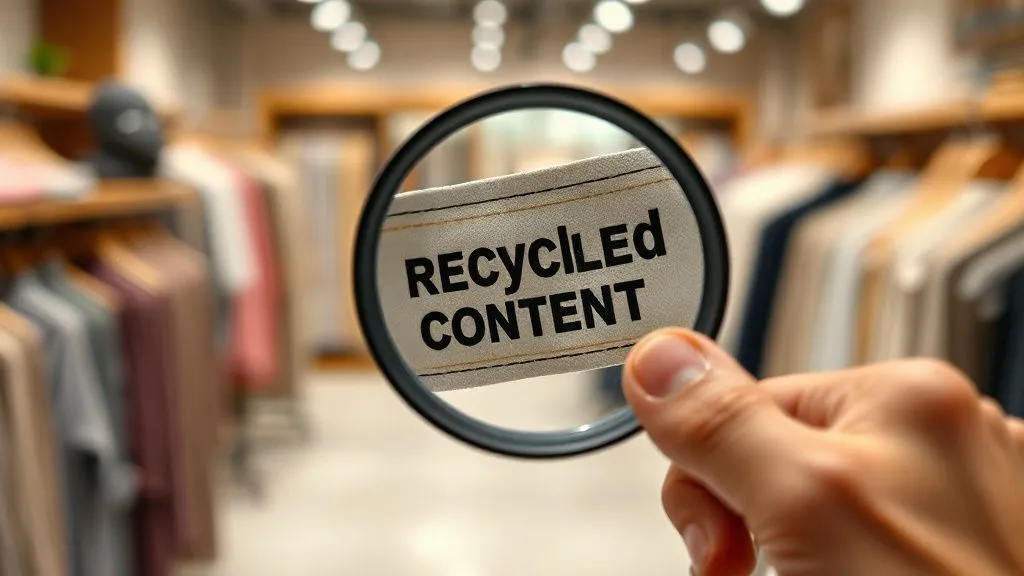
Verifying recycled inputs: Look for the GRS or RCS logo with a clear percentage of recycled content. This confirms that the material isn't just 'recycled-like' but genuinely made from post-consumer or pre-consumer waste.
Forest Stewardship Council (FSC)
For cellulose-based materials like viscose, modal, and lyocell, FSC certification is your key indicator. It ensures that the wood pulp used comes from responsibly managed forests, preventing deforestation and protecting biodiversity. This is vital because conventional viscose production can contribute to significant environmental damage.
OEKO-TEX Standard 100
While not a 'sustainability' certification in the environmental sense, OEKO-TEX Standard 100 is critical for eco-chic designs. It certifies that every component of a product, from the fabric to the thread and accessories, has been tested for harmful substances and is therefore harmless for human health. This is a baseline for any truly 'clean' or 'eco' product, ensuring it's safe to wear.
Vegan Certifications (PETA Approved Vegan, V-Label)
If your eco-chic design specifically eschews animal products, certifications like 'PETA Approved Vegan' or 'V-Label' confirm that no animal-derived materials were used in the product's creation. This is especially important for 'vegan leathers' which can sometimes contain animal-based glues or dyes.
"Don't just look for a logo; understand what each certification truly guarantees. Some focus solely on content, others on the entire ethical footprint." - A vital distinction often missed by new designers.
| Certification | Focus | Key Benefit |
|---|---|---|
| GOTS | Organic fibers, entire supply chain | Environmental & social criteria |
| GRS | Recycled content | Verifies recycled input & responsible production |
| FSC | Responsible forest management | Prevents deforestation for cellulose fibers |
| OEKO-TEX 100 | Harmful substances testing | Ensures product safety from chemicals |
Step 2: Demand Transparency & Traceability
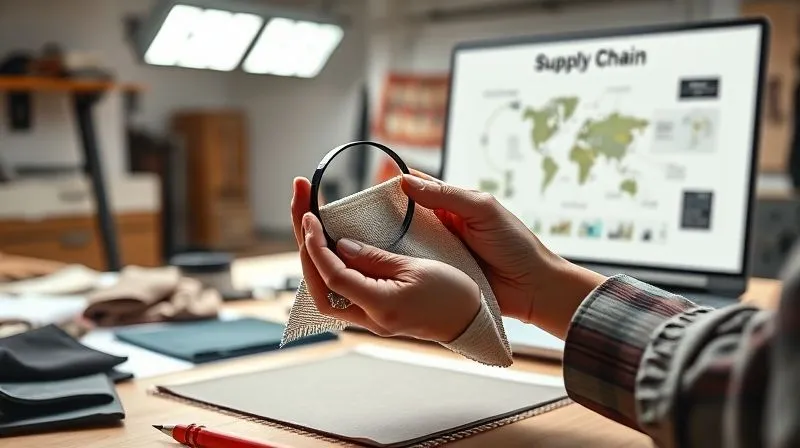
Beyond certifications, the mark of a truly sustainable luxury brand is its willingness to be transparent about its entire supply chain. This isn't just about showing off; it's about accountability and empowering you with knowledge.
Supply Chain Mapping
A genuinely sustainable brand should be able to map its supply chain, identifying where their raw materials come from, who processes them, and where the final product is assembled. This level of detail allows for verification at each stage, rather than just relying on a final product label.
Questions to ask: Where is the cotton grown? Who spins the yarn? Where is the fabric dyed and finished? What are the names and locations of the factories? The more specific the answers, the more trustworthy the brand.
Blockchain & Digital Traceability
Emerging technologies are revolutionizing supply chain transparency. Blockchain, for instance, can create an immutable, verifiable record of a material's journey from origin to finished product. This digital ledger makes it nearly impossible to falsify claims and provides unparalleled traceability.
As marketing guru Seth Godin often says, "People don't buy goods and services. They buy relations, stories, and magic." In sustainable fashion, the story *is* the supply chain, and technology is making that story verifiable. According to a Deloitte study, blockchain can significantly enhance trust and efficiency in complex supply networks.
- Check brand's website for sustainability reports: Look for dedicated sections detailing their material sourcing, supplier lists, and environmental impact.
- Look for specific supplier names, not just general regions: 'Made in Italy' is great, but 'Fabric from Mill X in Biella, Italy, certified by Y' is even better.
- Contact customer service for details if unclear: A truly transparent brand will be happy to provide more information.
- Seek brands using blockchain or QR codes: Many innovative brands are now using QR codes on labels that link directly to a product's supply chain history.
"Transparency isn't just a buzzword; it's the bedrock of trust in sustainable luxury. If a brand can't show you its journey, question its destination." - A mantra I live by in this industry.
For further insights into supply chain transparency, I highly recommend exploring the Fashion Revolution Transparency Index, which annually evaluates major global fashion brands.
Step 3: Understand Material Composition & Lifecycle
A material's sustainability isn't just about its origin; it's about its entire journey, from raw material to its end-of-life. This holistic view is crucial for genuine eco-chic designs.
Beyond the Label: What's Really in It?
A label might say 'organic cotton,' but what about the other 5%? Blends can be tricky. A fabric that's 95% organic cotton and 5% conventional elastane still has a non-organic component, and that elastane might hinder biodegradability or recycling. Always scrutinize the full composition. True luxury often prioritizes single-fiber materials precisely because they simplify end-of-life processing.
Durability & Longevity: The True Test of Luxury
One of the most sustainable actions in fashion is making clothes that last. A truly 'eco-chic' material isn't just sustainably sourced; it's also designed for longevity. Luxury, by definition, implies enduring quality. Look for materials with inherent strength, resilience, and excellent care properties. For example, high-quality linen or peace silk, if cared for properly, can last decades, far outliving fast fashion items.
Consider the weave, the finish, and the inherent properties. Is the material prone to pilling? Will it lose its shape quickly? These factors, while not directly related to 'sourcing,' are fundamental to a material's overall sustainable impact.
End-of-Life Considerations: Biodegradability vs. Recyclability
What happens to the material when the garment is no longer wearable? For natural fibers, biodegradability is key. Can it return to the earth without leaving harmful residues? For innovative synthetics, recyclability is often the goal. Can it be reprocessed into new fibers, closing the loop?
Designing for circularity means choosing materials that are either easily biodegradable (like pure organic cotton, linen, silk) or easily recyclable (like single-composition recycled polyester). Blends, again, pose a challenge here as separating fibers for recycling is difficult.
Step 4: Assess Brand Ethics & Social Impact
Sustainable luxury isn't just about environmental impact; it's equally about social responsibility. The 'eco' in eco-chic extends to the people involved in the production process.
Fair Labor Practices
Are the people who grow, harvest, spin, weave, and sew your materials paid living wages and working in safe conditions? Certifications like Fair Trade or SA8000 specifically address these social criteria. A brand's commitment to fair labor should be evident in their public reporting and, ideally, through third-party audits of their factories.
Look for information on factory conditions, worker representation, and efforts to empower communities. This is where the 'luxury' aspect truly shines, reflecting a respect for human dignity throughout the supply chain.
Community Engagement & Local Sourcing
Many genuine sustainable luxury brands actively engage with and support the communities where their materials are sourced or processed. This might involve investing in local infrastructure, providing education, or preserving traditional crafts. Local sourcing, where feasible, can also reduce carbon footprint and support regional economies.
Case Study: Verifying 'Ethical Silk' from Serica Brands
Serica Brands, a luxury eco-chic label, claimed its silk was 'peace silk' and ethically sourced. A deep dive into their supply chain, prompted by customer inquiries (using steps 1-3), revealed they partnered directly with small, certified organic sericulture farms in India that paid living wages and employed traditional, cruelty-free methods. This level of granular detail, verifiable through their public reports and third-party audits, cemented their genuine sustainable luxury status and significantly boosted consumer trust and sales. They even provided photos and testimonials from the artisans. This demonstrated that their claims were not just marketing, but deeply embedded in their operational ethos.
For more on fair labor in the fashion industry, the International Labour Organization (ILO) provides comprehensive resources and reports.
Step 5: Beware of Greenwashing Red Flags
As the demand for sustainable products grows, so does the temptation for brands to engage in greenwashing—making misleading claims about their environmental practices. Being able to spot these red flags is a critical skill for verifying genuine sustainable luxury materials.
Vague Language & Buzzwords
Be wary of terms like "eco-friendly," "natural," "green," "sustainable," or "conscious" when they are used without specific, verifiable evidence. These are often used as blanket statements without backing up how or why they are sustainable. For example, a brand claiming "natural materials" might be using conventional cotton, which is notoriously water and pesticide-intensive.
Lack of Data & Evidence
If a brand makes a sustainability claim but provides no certifications, reports, data, or transparent supply chain information, that's a major red flag. Genuine sustainable brands are proud to share their progress and challenges, often providing detailed environmental impact assessments or third-party audit results.
One-Off Sustainable Collections
Some brands will launch a small "sustainable collection" while their core business remains highly unsustainable. While any step towards sustainability is good, true eco-chic brands integrate sustainable practices throughout their entire operation, not just in a limited edition capsule. Look for systemic change, not just token gestures.
"If a claim sounds too good to be true, or lacks verifiable specifics, it probably is. Ask critical questions, and demand concrete answers." - My advice for navigating the marketing maze.
Step 6: The Power of Independent Reviews and Advocacy Groups
You don't have to navigate the complex world of sustainable luxury alone. Several independent organizations and platforms are dedicated to researching and rating fashion brands based on their environmental and social impact.
Consult organizations like Good On You, a leading ethical brand rating platform, or Fashion Revolution, which advocates for greater transparency in the fashion industry. These groups do the heavy lifting of vetting brands and materials, providing easily digestible information and ratings based on comprehensive criteria. Reading independent reviews and articles from trusted journalistic sources can also offer invaluable insights into a brand's true practices.
These resources can serve as an excellent starting point for discovering brands that genuinely align with sustainable luxury principles, offering a quick and reliable way to cross-reference your own findings.
Step 7: Cultivating Your Own Expert Eye for Eco-Chic Quality
While certifications and transparency are crucial, developing your own 'expert eye' for quality and craftsmanship is the ultimate tool in verifying genuine sustainable luxury materials. This skill comes with experience and attention to detail.
Learn to assess a material's hand-feel, drape, and texture. High-quality sustainable materials often have a distinct richness and integrity that mass-produced, conventional fabrics lack. Examine the construction of a garment: are the seams strong? Is the stitching even and precise? Are there raw edges or loose threads?
True luxury is synonymous with impeccable craftsmanship and materials that are built to last. When you handle a piece made from genuine sustainable luxury materials, you should feel the quality, see the attention to detail, and intuitively understand that it's designed for longevity. This tactile and visual assessment complements all the other verification steps, solidifying your confidence in your eco-chic choices.
| Red Flag | Action |
|---|---|
| Vague 'Eco-friendly' claims | Demand specific certifications & data |
| No supply chain transparency | Look for supplier names, factory locations |
| Unrealistic low prices for 'luxury' | Question the ethical sourcing & quality |
| Lack of third-party verification | Seek GOTS, GRS, FSC, PETA certifications |

Frequently Asked Questions (FAQ)
Q1: Are all natural materials automatically sustainable? No, not necessarily. While often perceived as 'green,' many natural materials can have significant environmental impacts if not grown or processed sustainably. For example, conventional cotton is one of the most pesticide and water-intensive crops globally. Similarly, some natural fibers might require harsh chemical treatments during processing. Always look for organic certifications (like GOTS) or regenerative farming claims for natural fibers to ensure their sustainable credentials.
Q2: How do I know if a 'vegan leather' is truly sustainable? The term 'vegan leather' can be misleading. While it means no animal products are used, many traditional vegan leathers are made from PVC or PU, which are petroleum-based plastics with significant environmental footprints. To verify true sustainability, look for bio-based vegan leathers (e.g., made from pineapple leaves, mushrooms, grapes, or cactus) with high bio-content percentages. Inquire about their production processes, chemical usage, and end-of-life options (e.g., biodegradability or recyclability). Certifications like PETA Approved Vegan confirm animal-free status, but not necessarily environmental sustainability.
Q3: What's the biggest challenge in verifying sustainable luxury materials? The biggest challenge lies in the complexity and opaqueness of global supply chains. Materials often travel through multiple countries and hands before reaching the final product stage, making it difficult to track every step. Lack of standardized regulations, varying definitions of 'sustainability,' and the prevalence of greenwashing tactics further complicate verification. This is why demanding comprehensive transparency, relying on robust third-party certifications, and cultivating an expert eye are so crucial.
Q4: Can a small independent designer genuinely source sustainable luxury materials? Absolutely, and often with greater transparency! Small designers often have the advantage of working directly with suppliers, artisans, or smaller mills, fostering closer relationships and enabling more direct verification of practices. They can also focus on local sourcing, upcycling, or using deadstock materials, which inherently offer more control over the supply chain. While they might not have the purchasing power for every certification, their direct relationships and commitment to craft often serve as strong indicators of authenticity.
Q5: Is sustainable luxury always more expensive? While sustainable luxury often comes with a higher upfront cost, it's essential to consider the 'true cost' and value proposition. Ethical sourcing, fair wages, eco-friendly processing, and high-quality materials inherently cost more than fast fashion production. However, sustainable luxury items are designed for longevity, reducing the need for frequent replacements. They represent an investment in craftsmanship, durability, and a cleaner conscience. When you factor in the extended lifespan and timeless appeal, the long-term value often surpasses that of cheaper, less sustainable alternatives.
Key Takeaways and Final Thoughts
- Prioritize Certifications: Always look for robust, third-party certifications like GOTS, GRS, and FSC to confirm material claims.
- Demand Transparency: A truly sustainable luxury brand will be open about its entire supply chain, from raw material to finished product.
- Think Holistically: Consider the material's full lifecycle, including durability, end-of-life options, and the brand's social impact.
- Beware of Greenwashing: Learn to spot vague claims and a lack of verifiable data. Your skepticism is a powerful tool.
- Cultivate Your Eye: Develop an understanding of quality and craftsmanship; genuine luxury feels and looks different.
Verifying genuine sustainable luxury materials for eco-chic designs is not a simple task, but it is an incredibly rewarding one. By applying these expert-backed steps, you move beyond mere aspiration to informed action. You become a discerning curator, capable of building a wardrobe or a product line that truly reflects your values, without compromising on elegance or quality. The future of fashion is not just beautiful; it's also responsible, and with this knowledge, you are at the forefront of shaping it. Embrace the challenge, empower your choices, and let your eco-chic designs speak volumes about genuine sustainability.
Recommended Reading
- 7 Proven Strategies: Attracting Younger UHNW to Haute Couture Collections
- 7 Proven Strategies: Minimize Womenswear Seasonal Overstock Markdown Losses
- Unleash Your True Self: How to Develop a Unique Personal Street Style
- The Secret Revealed: How Stylists Pick Celebrity Luxury Red Carpet Gowns
- Auditing Multi-Tier Supply Chains: 7 Steps to Cruelty-Free Compliance




Your email address will not be published. Required fields are marked *