

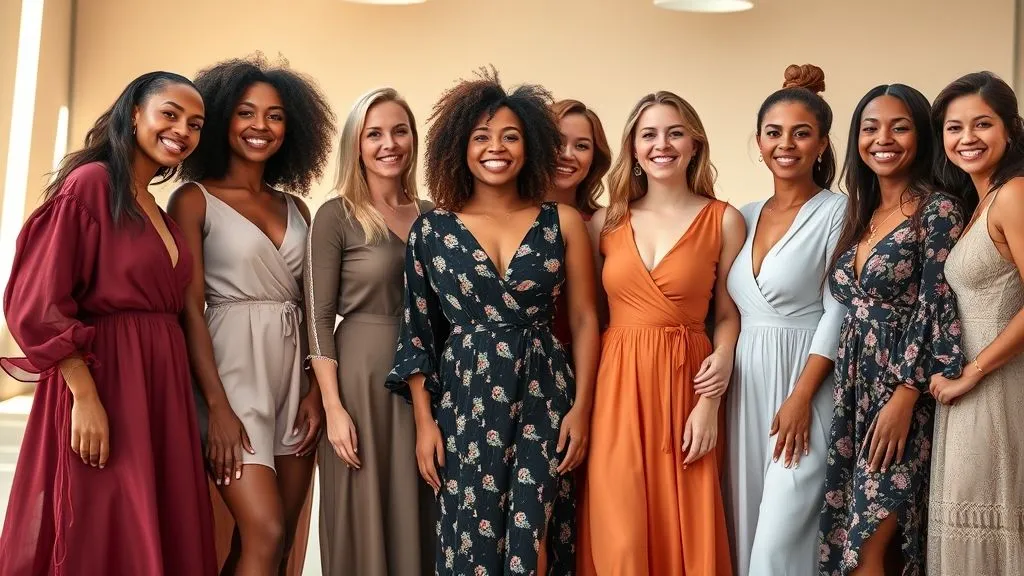
How to Ethically Market Feminine Fashion to Diverse Body Types Online?
For over 15 years in the dynamic world of womenswear, I've witnessed firsthand the seismic shifts in consumer expectations. What was once acceptable – a narrow, often unattainable beauty standard – is now not just outdated, but actively detrimental to a brand's reputation and bottom line. I've seen countless brands, even those with beautiful designs, falter because they failed to grasp the fundamental truth: modern femininity is diverse, multifaceted, and demands genuine representation.
The challenge for many brands isn't a lack of intention, but rather a lack of a clear, actionable roadmap. They grapple with questions of tokenism, fear of missteps, and the complex logistics of genuinely catering to an expansive range of body types online. This isn't just about adding a 'plus-size' section; it's about fundamentally rethinking how we conceive, present, and communicate feminine fashion to ensure every woman feels seen, valued, and celebrated.
In this definitive guide, I'll share the frameworks, strategies, and deeply practical insights I've developed over years of experience. You'll learn not just the 'what,' but the 'how' – actionable steps to move beyond performative inclusivity and build a brand that authentically resonates with, and profitably serves, the beautifully diverse spectrum of women in today's digital landscape. Let's transform your approach to ethical fashion marketing.
1. Reimagining Your Brand's Core Values: Beyond Aesthetics
Before you even think about campaigns or models, you must look inward. Ethical marketing for diverse body types isn't a tactic; it's a reflection of your brand's deepest values. If your core ethos doesn't genuinely embrace inclusivity, any outward effort will ring hollow, appearing as 'woke washing' rather than authentic commitment.
The Foundation: Auditing Your Internal Culture
In my experience, true inclusivity starts from within. Does your team reflect the diversity you aim to serve? Are your designers, marketers, and customer service representatives trained in body neutrality and inclusive language? This internal alignment is crucial. It ensures that every touchpoint, from product development to customer support, inherently carries the message of acceptance and celebration.
"Authenticity is not something you say, it's something you live. Consumers are incredibly astute at detecting dissonance between a brand's stated values and its actual practices." - Industry Veteran Insight
Start by conducting an honest internal audit. Review your hiring practices, employee training, and even the language used within your company. Only when your internal culture champions diversity can your external marketing genuinely reflect it.

2. Data-Driven Empathy: Understanding Your Diverse Audience
Generic demographic data won't cut it. To ethically market to diverse body types, you need to cultivate what I call 'data-driven empathy.' This means going beyond basic size charts and delving into the nuanced desires, pain points, and fashion aspirations of women across the body spectrum.
Leveraging Qualitative and Quantitative Insights
Quantitative data, like website analytics and sales figures, can tell you *what* is happening. But qualitative data – surveys, focus groups, social listening, and direct customer feedback – tells you *why*. Engage with your community. Ask them about their struggles finding well-fitting clothes, their desires for certain styles, and their feelings about fashion advertising.
Actionable Steps for Deeper Understanding:
- Deep Dive Surveys: Implement comprehensive surveys that go beyond standard demographics. Ask about body shape perceptions, preferred fit characteristics (e.g., 'true to size,' 'generous fit,' 'tailored'), and challenges with online sizing.
- Social Listening Tools: Monitor conversations on platforms like Instagram, TikTok, and Reddit. Pay attention to hashtags related to body positivity, size inclusivity, and specific body types (e.g., #pearshapedfashion, #applebodystyle).
- Customer Advisory Panels: Create a small, diverse panel of loyal customers who represent different body types. Meet with them regularly to gather feedback on new designs, marketing concepts, and website functionality.
- Competitor Analysis: Observe how successful inclusive brands communicate and cater to diverse audiences. What are they doing well? Where are their gaps?
According to a Deloitte study on inclusive marketing, consumers are 1.7 times more likely to feel a sense of belonging when brands reflect their values and identities. This isn't just about being 'nice'; it's about building genuine connection.
3. Visual Storytelling: Crafting Truly Inclusive Campaigns
Your visuals are often the first, and most powerful, point of contact. Ethical marketing demands that your imagery reflects the real world – a world where beauty isn't confined to a single, narrow ideal. This means a radical shift in model selection, styling, and photography.
Beyond the Size 2: Authentic Representation in Every Frame
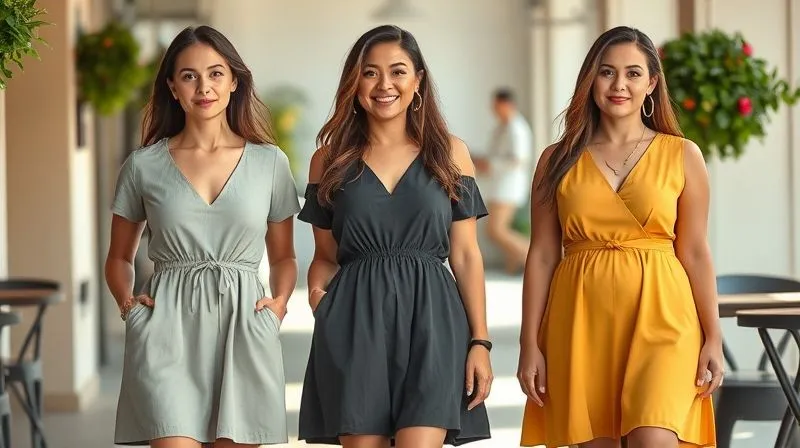
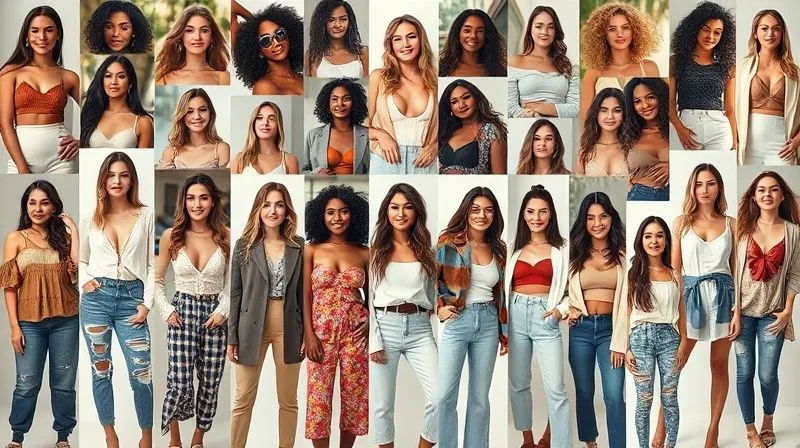
Firstly, diversify your models. Feature women of varying sizes, ages, ethnicities, and abilities. Crucially, ensure these models are professional and confident, not just token additions. Their presence should feel natural and integrated, not an afterthought. Show them moving, laughing, and living in your clothes, demonstrating comfort and style across different body types.
Case Study: Bloom & Grace's Visual Revolution
Case Study: How Bloom & Grace Boosted Engagement with Authentic Visuals
Bloom & Grace, a fictional mid-sized feminine fashion brand, faced stagnating engagement despite beautiful products. Their campaigns exclusively featured professional models conforming to traditional beauty standards. By implementing a strategy of diverse model casting, including professional models ranging from size 0 to 24, and prioritizing unretouched photography, they saw a dramatic shift. Their Instagram engagement rate increased by 45% within six months, and customer comments frequently praised their 'relatability' and 'authenticity.' This resulted in a 20% increase in website traffic from social media and a significant boost in first-time purchases from previously underserved demographics.
Secondly, prioritize unretouched authenticity. While professional lighting and styling are essential, excessive photo manipulation that alters body shapes or textures undermines trust. Be transparent. If you use editing, ensure it enhances the image without distorting reality. As marketing guru Seth Godin often says, "People do not buy goods and services. They buy relations, stories, and magic." Your story needs to be real.
4. The Language of Inclusivity: Copywriting That Connects
Words matter. The language you use in product descriptions, marketing copy, and social media posts can either build bridges or inadvertently alienate. Ethical marketing demands a conscious effort to adopt inclusive language that celebrates all body types, rather than categorizing or stigmatizing.
Avoiding Harmful Euphemisms and Celebrating Bodies
Steer clear of euphemisms like 'flattering' for larger sizes or implying that certain styles are meant to 'hide' or 'minimize' parts of the body. Instead, focus on positive attributes: comfort, style, quality, versatility, and how the garment makes the wearer feel confident and beautiful. Describe the fit accurately without judgment.
- Focus on Fit & Feel: Use terms like "designed for comfort," "drapes beautifully," "supportive," "flexible fit," "true to size."
- Celebrate Features: Highlight aspects like "elegant neckline," "cinched waist for definition," "roomy sleeves for ease of movement," rather than implying a need to cover up.
- Body Neutrality: Adopt language that doesn't assign moral value to body size. Avoid terms like "problem areas" or "slimming effect."
- Specificity: Instead of vague descriptions, provide detailed measurements and fit notes (e.g., "model is 5'10" wearing a size 14").
For more detailed guidance, consider resources like Mailchimp's Inclusive Language Guide, which offers excellent principles for respectful communication. Remember, your copy should empower, not imply a need for concealment or alteration.
5. Website & E-commerce Experience: Designing for Every Body
An ethical marketing strategy extends directly to your online shopping experience. If your website isn't designed with diverse body types in mind, all your beautiful campaigns will fall flat. This means intuitive sizing tools, realistic product displays, and a seamless journey for every customer.
Intuitive Sizing Tools and Resources
This is where many brands stumble. A standard size chart is a good start, but it's often insufficient. Diverse body types mean that a size 14 on one woman might fit differently on another. You need to provide comprehensive resources.
Optimizing Your E-commerce Experience:
- Detailed Size Charts with Body Measurements: Go beyond S/M/L. Provide actual garment measurements (bust, waist, hip, length) for each size.
- "Find Your Size" Quizzes/Tools: Integrate AI-powered or questionnaire-based tools that recommend sizes based on a customer's unique measurements and preferred fit.
- Model Diversity on Product Pages: Show the same garment on models of different sizes. This allows customers to visualize how the item might look on a body similar to their own.
- Customer Review Photos: Encourage customers to upload photos of themselves wearing the product, along with their size and basic body measurements. This user-generated content is incredibly powerful for building trust.
- Virtual Try-On Technology: While still evolving, virtual try-on tools can be game-changers, allowing customers to see how clothes drape on a digital avatar tailored to their dimensions.
As an example, consider the impact of clear, comparative data:
| Size | Bust (inches) | Waist (inches) | Hips (inches) | Fit Note |
|---|---|---|---|---|
| Small (US 4-6) | 34-35 | 26-27 | 36-37 | Tailored, close fit |
| Medium (US 8-10) | 36-37 | 28-29 | 38-39 | Comfortable, standard fit |
| Large (US 12-14) | 38-40 | 30-32 | 40-42 | Relaxed, generous fit |
| XL (US 16-18) | 41-43 | 33-35 | 43-45 | Flowy, designed for movement |
This kind of detailed information significantly reduces guesswork and boosts customer confidence, ultimately leading to fewer returns and higher satisfaction.
6. Leveraging User-Generated Content (UGC) Ethically
User-Generated Content (UGC) is a goldmine for ethical marketing, especially when targeting diverse body types. It's authentic, trustworthy, and showcases your products on real people, not just professional models. But it must be curated and amplified ethically.
Curating and Amplifying Authentic Voices
Encourage your customers to share photos and videos of themselves wearing your clothes. Create a dedicated hashtag and feature these posts prominently on your website and social media. This not only provides social proof but also builds a vibrant, inclusive community.
Guidelines for Ethical UGC:
- Always Ask for Permission: Before reposting any customer content, always reach out and get explicit permission.
- Credit the Creator: Tag or mention the customer in your posts. This shows respect and gives them recognition.
- Diversify Your Features: Ensure the UGC you feature represents the full spectrum of body types, not just those that traditionally align with fashion ideals.
- Avoid Manipulation: Do not edit or filter customer photos in a way that alters their appearance or body shape.
- Respond to Every Post: Engage with customers who share their content. This fosters loyalty and encourages more UGC.
The beauty of UGC is its inherent relatability. When a potential customer sees someone with a similar body type confidently wearing your garment, it creates an instant connection and builds trust far more effectively than any highly polished ad campaign. It's a testament to the fact that your brand genuinely serves and celebrates its diverse customer base.
7. Measuring Impact and Iterating: A Commitment to Continuous Improvement
Ethical marketing for diverse body types isn't a one-time project; it's an ongoing commitment. You need to continuously measure your impact, gather feedback, and be willing to iterate and improve. This demonstrates genuine dedication and builds long-term trust.
Beyond Vanity Metrics: True Engagement and Belonging
While sales and conversion rates are important, look beyond them. Track metrics that speak to inclusivity and brand sentiment:
- Social Media Sentiment Analysis: Are conversations around your brand becoming more positive, especially concerning inclusivity and representation?
- Customer Feedback on Fit & Sizing: Monitor reviews and direct feedback channels for comments related to sizing accuracy and satisfaction across different body types.
- Website Engagement by Demographics: If you can segment your audience, see if engagement (time on page, bounce rate) is improving for previously underserved groups.
- Return Rates for Sizing Issues: A decrease in returns due to incorrect sizing can indicate improved accuracy in your sizing tools and descriptions.
"The brands that will thrive in the next decade are those that are brave enough to listen, learn, and adapt, even when it means challenging their own assumptions." - My Personal Philosophy
Create feedback loops. Regularly survey your customers, run A/B tests on different visual campaigns, and actively solicit input from your diverse community. Be transparent about your journey and acknowledge when you make mistakes, demonstrating a willingness to learn and grow. This commitment to continuous improvement is the hallmark of truly ethical and successful marketing.
For deeper insights into impactful measurement, consider resources from organizations like Harvard Business Review, which frequently publishes articles on measuring intangible brand value and customer loyalty in the modern era.
Frequently Asked Questions (FAQ)
Q: How do I avoid 'woke washing' or appearing inauthentic? Authenticity comes from internal alignment. Start by genuinely embedding inclusivity into your company culture, product development, and team diversity. If your actions consistently match your words, you'll build trust. Avoid one-off campaigns without sustained commitment.
Q: What if my current inventory only covers a limited size range? Should I still market to diverse body types? Honesty is key. While you work towards expanding your size range (which should be a priority), you can still engage in inclusive conversations. Acknowledge your current limitations transparently, share your commitment to expanding, and invite feedback on what customers would like to see. Do not feature diverse models if you cannot currently serve them with your product.
Q: How do I handle negative feedback or criticism regarding inclusivity efforts? View criticism as an opportunity to learn. Respond thoughtfully, acknowledge valid points, and explain how you plan to address them. Avoid defensiveness. It demonstrates humility and a genuine commitment to improvement, which can turn critics into allies.
Q: What's the ROI of truly inclusive marketing? The ROI is significant and multifaceted. Beyond increased sales from a wider customer base, you'll see enhanced brand loyalty, stronger positive sentiment, improved brand reputation, and reduced customer acquisition costs due to authentic word-of-mouth. Inclusive brands are seen as progressive and trustworthy, attracting both customers and top talent.
Q: How can small brands compete with larger ones on inclusivity without huge budgets? Small brands have an advantage in agility and direct customer connection. Focus on hyper-authentic UGC, build a strong community through direct engagement, and prioritize genuine storytelling over polished, expensive campaigns. Your authenticity and direct relationships can often outweigh larger budgets.
Key Takeaways and Final Thoughts
Navigating the landscape of ethical marketing for feminine fashion to diverse body types online requires more than just good intentions; it demands a strategic, heartfelt, and continuous effort. Here are the critical takeaways:
- Internal First: True inclusivity starts with your brand's core values and internal culture.
- Listen & Learn: Utilize both qualitative and quantitative data to truly understand the nuanced needs of your diverse audience.
- Visual Authenticity: Prioritize diverse, unretouched models and realistic visual storytelling.
- Empowering Language: Craft copy that celebrates, rather than categorizes or stigmatizes, all body types.
- Seamless Online Experience: Design your website and e-commerce journey with comprehensive sizing tools and diverse product displays.
- Leverage UGC Ethically: Empower customers to share their authentic experiences, always with permission and credit.
- Commit to Iteration: Continuously measure impact beyond sales, gather feedback, and adapt your strategies.
The future of feminine fashion is inherently inclusive. By embracing these principles, you're not just ethically marketing; you're building a more resilient, relevant, and beloved brand that genuinely connects with women everywhere. This isn't just about doing good; it's about doing smart business in an evolving world. Step forward with confidence, empathy, and a commitment to real change.
Recommended Reading
- 7 Steps: How to Audit Fashion Supply Chains for Ethical Compliance
- Fashion Visuals Failing? 5 Ways to Boost Campaign Conversions
- Safeguard Digital Fashion: 5 Blockchain Strategies for Design Rights
- Beyond Sponsored Posts: 7 Proven Streams for Fashion Blog Income?
- Unlock Hidden Gems: Your Guide to Scouting Unique Fashion Photography Locations



Your email address will not be published. Required fields are marked *