


How to Eliminate Daily Outfit Decisions for Busy Professionals?
For over two decades in the menswear industry, I've witnessed firsthand the subtle yet significant drain that daily outfit decisions impose on even the most accomplished professionals. It's a common, often unacknowledged, source of friction that starts the day on the wrong foot.
The problem isn't just about what to wear; it's about decision fatigue – the mental exhaustion that comes from making too many choices. For busy professionals, whose days are packed with high-stakes decisions, wasting precious mental energy on trousers versus chinos, or a blue shirt versus a white one, is an unnecessary luxury they can ill afford. It saps creativity, diminishes focus, and ultimately, detracts from performance.
In this definitive guide, I will share a systematic, expert-backed framework that will not only simplify your morning routine but also elevate your professional image. You'll learn how to build a highly efficient, versatile, and stylish wardrobe that eliminates daily outfit decisions, allowing you to reclaim your time, energy, and mental clarity for what truly matters.
Understanding the Cost of Decision Fatigue in Your Wardrobe
Before we dive into solutions, it's crucial to acknowledge the real impact of daily outfit dilemmas. It's more than just a minor inconvenience; it's a measurable drain on your cognitive resources.
The Mental Load of "What to Wear"
Every decision, no matter how small, consumes a sliver of your mental energy. Psychologists refer to this phenomenon as decision fatigue. When you wake up and stare at a closet full of clothes, trying to piece together an appropriate and stylish outfit, you're expending mental currency before your workday even truly begins. This isn't just theory; research published in the Harvard Business Review highlights how decision fatigue can lead to poor choices, procrastination, and reduced willpower later in the day.
Imagine starting your day already feeling a little drained. That residual fatigue can impact your ability to focus on complex tasks, make critical judgments, or even engage effectively in client meetings. It's a silent productivity killer.
Time as Your Most Valuable Asset
Beyond mental energy, there's the tangible loss of time. How many minutes do you spend each morning pondering your attire? Five? Ten? Fifteen? Over a work week, that's anywhere from 25 to 75 minutes. Annually, this could amount to days – days that could be spent on strategic planning, professional development, personal well-being, or simply enjoying a more relaxed start to your day.
As professionals, we're constantly reminded that time is money. Yet, many of us unconsciously hemorrhage minutes in front of our wardrobes. My goal here is to help you plug that leak.

Step 1: Define Your Professional Style Archetype
The first step in building an efficient wardrobe is to understand what 'professional' truly means for you. There's no one-size-fits-all answer, as your industry, role, and personal brand dictate appropriate attire.
Business Formal vs. Business Casual vs. Smart Casual
These aren't just arbitrary labels; they represent distinct expectations. Are you in a traditional finance or legal role requiring daily suits? Or a tech executive where smart casual is the norm? Perhaps you're a consultant who needs to pivot between different client environments.
- Business Formal: Dark suits, crisp dress shirts, silk ties, polished leather dress shoes.
- Business Casual: Blazers, dress trousers/chinos, button-down shirts (collared), polo shirts, knitwear, loafers/derbies.
- Smart Casual: Dark wash jeans/chinos, clean sneakers, stylish knitwear, tailored shirts, casual blazers.
Your Industry, Your Role, Your Personal Brand
Consider the unspoken dress codes of your industry and company culture. More importantly, think about the personal brand you want to project. Do you want to appear authoritative, approachable, innovative, or traditional? Your clothing is a powerful non-verbal communicator. I've often advised clients that their wardrobe should be an extension of their professional ambition, not a hurdle.
Actionable Step: Assess Your Current Needs
- List Your Typical Work Scenarios: Formal meetings, client visits, office days, conferences, casual team events.
- Observe Your Peers/Superiors: Note what successful individuals in your field wear.
- Reflect on Your Brand: What three words describe how you want to be perceived professionally? Your wardrobe should align.
Step 2: Conduct a Ruthless Wardrobe Audit and Declutter
Once you know your style archetype, it's time to tackle your existing wardrobe. This step is about honest assessment and brutal elimination. The goal is to create space, both physical and mental, for a more streamlined system.
The "Keep, Donate, Tailor, Discard" Method
Pull everything out of your closet. Yes, everything. Handle each item and ask yourself:
- Does it fit perfectly? If not, can it be tailored? (Tailoring is an investment in presenting your best self.)
- Have I worn it in the last 12 months? If not, why?
- Does it align with my defined professional style archetype?
- Is it in excellent condition? No stains, rips, fading, or excessive pilling.
- Does it make me feel confident and polished?
Sort items into four piles:
- Keep: Items that meet all criteria.
- Donate/Sell: Items in good condition but no longer serve your purpose.
- Tailor: Items that would be perfect with minor alterations.
- Discard: Items that are worn out, damaged, or beyond repair.
Identifying Gaps and Overlaps
After decluttering, you'll have a clearer picture of what you truly own. Now, look for:
- Gaps: Are you missing essential foundational pieces (e.g., a versatile blazer, quality dress shoes)?
- Overlaps: Do you have five identical white dress shirts, when three high-quality ones would suffice?
This audit isn't just about removing; it's about understanding what you need to acquire strategically.
| Item Category | Keep | Tailor | Donate | Discard |
|---|---|---|---|---|
| Shirts | 3 (White, Blue, Stripe) | 1 (Sleeve length) | 2 (Outdated patterns) | 1 (Stained) |
| Trousers | 2 (Charcoal, Navy) | 1 (Waist adjustment) | 1 (Wrong fit) | 0 |
| Blazers | 1 (Navy) | 0 | 1 (Too casual) | 0 |
| Shoes | 2 (Black Oxfords, Brown Loafers) | 0 | 1 (Uncomfortable) | 1 (Worn out) |
Step 3: Build Your Core Capsule: The Foundation of Effortless Style
This is where the magic happens. A capsule wardrobe is a collection of essential items that are versatile and interchangeable, allowing you to create numerous outfits with minimal pieces. For a busy professional, this is the ultimate time-saver.
The Power of Neutrals and Complementary Colors
The backbone of any effective capsule wardrobe is a strong foundation of neutral colors: navy, charcoal, grey, black, white, and beige. These colors are inherently versatile and pair seamlessly with almost anything. Once you have your neutrals, you can strategically introduce a few complementary accent colors (e.g., a deep burgundy, forest green, or a classic blue) through shirts, ties, or accessories.
Essential Staples: Shirts, Trousers, Blazers, Outerwear
Focus on high-quality, classic pieces that transcend trends. Here's a general guide for a professional menswear capsule:
- Shirts (5-7): 2-3 white dress shirts, 2-3 light blue dress shirts, 1-2 patterned/textured shirts (e.g., subtle stripe, fine check).
- Trousers (3-4): 1-2 pairs of wool dress trousers (charcoal, navy), 1-2 pairs of well-fitting chinos (khaki, navy, grey).
- Blazers/Jackets (2-3): 1 navy blazer (the workhorse!), 1 grey or tweed blazer, 1 casual jacket (e.g., a field jacket or sleek bomber for smart casual).
- Suits (1-2): 1 versatile navy suit, 1 charcoal or grey suit (if business formal is frequent).
- Knitwear (2-3): Fine-gauge merino wool or cashmere sweaters/cardigans in neutral tones.
- Outerwear (1-2): A classic trench coat or a minimalist topcoat.
Investing in Quality Over Quantity
This cannot be stressed enough. When you have fewer items, each one needs to be durable, well-made, and fit perfectly. Investing in quality fabrics (e.g., merino wool, Egyptian cotton, cashmere) and solid construction means your clothes will last longer, look better, and require less frequent replacement. As menswear experts often advise, buying fewer, better things is a sustainable and economically sound strategy in the long run.
Case Study: How John, a Marketing Director, Transformed His Mornings
John, a marketing director at a fast-paced tech firm, used to spend 15-20 minutes each morning trying to decide what to wear. He had a closet full of clothes but felt like he had nothing to wear. After defining his 'smart casual' archetype and conducting a ruthless audit, he built a capsule of 25 core items (excluding underwear/socks). He focused on navy, grey, and white, with a few olive and burgundy accents. By implementing the principles of interchangeability, John reduced his morning dressing time to under 5 minutes. He reported feeling less stressed, more focused, and surprisingly, received more compliments on his 'elevated' and consistent style. This efficiency allowed him to start his day with a clear mind, dedicating more time to strategic thinking before his first meeting.
Step 4: Master the Art of Interchangeability and Layering
The true power of a capsule wardrobe lies in its ability to create a multitude of looks from a limited number of pieces. This is achieved through interchangeability and smart layering.
Creating Multiple Outfits from Fewer Pieces
Every item you own should ideally be able to pair with at least three other items in your capsule. For example, a navy blazer shouldn't just go with one pair of trousers; it should work with your charcoal dress trousers, your khaki chinos, and even dark wash jeans if appropriate for your role. A white dress shirt should be wearable with a suit, under a blazer with chinos, or even standalone with dress trousers.
Think of your wardrobe as a matrix. Each piece is a variable that can combine with others to form a unique equation. This modular approach is what eliminates decision fatigue.
The Role of Accessories: Shoes, Belts, Watches
Accessories are the unsung heroes of a capsule wardrobe. They add personality, polish, and can dramatically alter an outfit's formality or aesthetic without requiring a whole new set of clothes. Focus on:
- Shoes (3-4 pairs): Black leather Oxfords/Derbies, Brown leather Loafers/Derbies, a versatile pair of clean, minimalist sneakers (for smart casual).
- Belts (2): One black leather, one brown leather, matching your shoes.
- Watches (1-2): A classic dress watch and perhaps a more robust, versatile timepiece.
- Ties (3-5): A mix of solids and subtle patterns in colors that complement your shirts and blazers.
Actionable Step: Outfit Combinations Practice
Dedicate an hour to trying on different combinations. Take photos of successful outfits. This visual library will be invaluable when you're short on time. You'll be surprised how many distinct looks you can create.
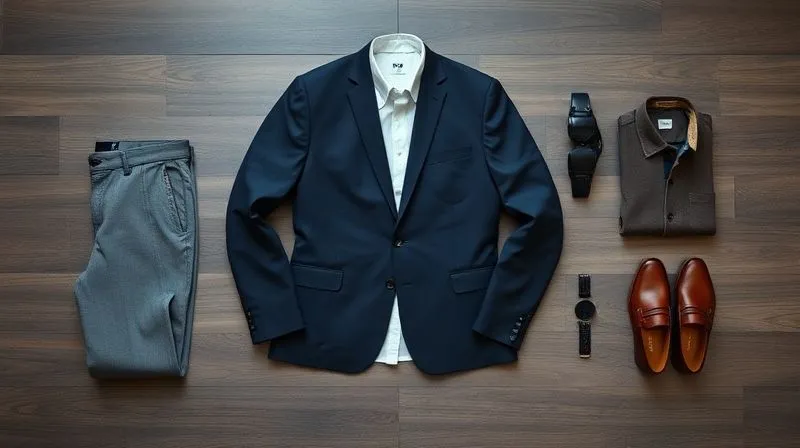
Step 5: Implement a Weekly Outfit Planning System
Even with a perfectly curated capsule, decision fatigue can creep back in if you don't have a system for deployment. This is where weekly planning becomes your secret weapon.
The Sunday Evening Ritual: Plan & Prep
I advise all my clients to adopt a 'Sunday evening ritual.' Take 15-20 minutes to:
- Check Your Calendar: Review your week's appointments, meetings, and events. Note any specific dress code requirements.
- Plan Your Outfits: Based on your calendar, lay out or visually plan each day's outfit, from Monday to Friday. Consider weather forecasts.
- Prepare Everything: Ensure shirts are ironed, shoes are polished, and any necessary dry cleaning is handled. Hang each outfit together (e.g., shirt, trousers, blazer, tie) or create digital 'outfit cards' from your photo library.
This small investment of time on Sunday saves you exponentially more time and stress throughout the week. You wake up knowing exactly what you'll wear, eliminating any morning guesswork.
Leveraging Digital Tools (Optional)
For the tech-savvy, apps like Stylebook or Cladwell can help you digitize your wardrobe, create outfits, and even track wear. While not essential, they can be powerful aids for refining your system over time.
| Day | Outfit | Notes |
|---|---|---|
| Monday | Navy Suit, White Shirt, Burgundy Tie, Black Oxfords | Client Presentation |
| Tuesday | Grey Trousers, Light Blue Shirt, Navy Blazer, Brown Loafers | Internal Meetings |
| Wednesday | Khaki Chinos, White Polo, Casual Blazer, Clean Sneakers | Team Building Event |
| Thursday | Charcoal Suit, Striped Shirt, Black Tie, Black Oxfords | Board Meeting |
| Friday | Dark Wash Jeans, Navy Knit Sweater, Brown Loafers | Casual Office Day |
Beyond the Basics: Maintenance and Refinement
Building an efficient wardrobe is not a one-time event; it's an ongoing process of maintenance and refinement. Your needs may change, and your capsule should evolve with you.
Seasonal Adjustments and Smart Additions
While the core of your capsule remains constant, you'll need to make seasonal adjustments. This might mean swapping out heavier wool trousers for lighter cotton or linen blends in summer, or adding a trench coat for spring rains. These are additions, not wholesale changes, designed to complement your existing system.
When considering new purchases, always ask: "Does this fit my style archetype? Is it interchangeable with at least three existing items? Is it high quality?" This discipline prevents impulse buys and wardrobe creep.
The Importance of Tailoring and Garment Care
Even the most expensive clothes look cheap if they don't fit well. A good tailor is an invaluable partner in ensuring your capsule pieces always look sharp and refined. Sleeves, trouser hems, and jacket waists are common areas for simple, impactful alterations.
Equally important is proper garment care. High-quality clothes deserve high-quality care. Follow washing instructions, use good hangers, and invest in shoe trees. This extends the life of your garments and keeps them looking pristine, further solidifying your polished professional image. As renowned fashion journalist Derek Blasberg once said, "It's not about how much you spend, but how well you wear it."

Frequently Asked Questions (FAQ)
How many items should be in a professional men's capsule wardrobe? While there's no magic number, a highly functional professional capsule typically ranges from 25-40 core items (excluding underwear, socks, and gym wear). This allows for sufficient variety and interchangeability without overwhelming choices. The exact number depends on your specific professional requirements and climate.
What if my job requires very different attire for different situations (e.g., factory floor vs. boardroom)? In such cases, consider creating two distinct mini-capsules within your larger wardrobe. One for your 'hands-on' role and another for your 'executive' role. The principles of versatility and interchangeability still apply within each mini-capsule, ensuring you have clear, distinct outfits ready for each scenario.
How do I introduce color without breaking the neutral-focused system? Introduce color strategically through accent pieces that don't dominate the outfit. Think ties, pocket squares, socks, or a single colored dress shirt (e.g., a subtle lavender or forest green). These pieces should still complement your core neutrals, adding personality without disrupting the harmonious flow of your capsule.
Is this approach only for minimalist aesthetics? Not at all. While it embraces efficiency, a capsule wardrobe can be tailored to any aesthetic, from classic traditional to modern contemporary. The core principle is about intentionality and versatility, not necessarily minimalism. You can still express your personal style within a streamlined framework.
How often should I update or refresh my capsule wardrobe? A full audit and refresh is typically recommended once or twice a year, usually with seasonal transitions (e.g., spring/summer and fall/winter). This allows you to assess wear and tear, adjust for any changes in your professional life, and strategically replace or add items as needed, always keeping your style archetype in mind.
Key Takeaways and Final Thoughts
Eliminating daily outfit decisions isn't about sacrificing style; it's about optimizing your resources – your time, your energy, and your mental clarity – to perform at your peak. As a seasoned professional in menswear, I've seen the transformative power of a well-curated wardrobe.
- Understand Your Style Archetype: Your professional role dictates your wardrobe.
- Declutter Ruthlessly: Less is truly more when it comes to efficiency.
- Build a Versatile Core: Focus on quality neutrals and interchangeable pieces.
- Master Combinations: Learn to create multiple looks from fewer items.
- Plan Ahead: A weekly routine saves countless minutes and mental energy.
By implementing these proven steps, you won't just be simplifying your mornings; you'll be investing in your professional success and personal well-being. Imagine starting each day feeling confident, prepared, and ready to tackle your most important tasks, unburdened by the triviality of 'what to wear.' This isn't just a wardrobe strategy; it's a lifestyle upgrade for the busy professional. Take these actionable steps today, and reclaim your mornings.
Recommended Reading
- The Secret Playbook: How to Get Early Access to New Shoe Launches
- Ultimate Guide: Best Men's Wallet Styles For Minimalist Carry
- 5 Power Frames: Elevate Your Executive Presence with Strategic Eyewear
- 7 Proven Strategies: How to Stop Bots Ruining Your Streetwear Drops
- Best Comfort Shoes for Plantar Fasciitis Relief: Your Ultimate Guide





Your email address will not be published. Required fields are marked *