

How to Convert Beauty Influencer Content into Direct Sales?
For over 15 years in the dynamic world of beauty fashion, I've had a front-row seat to the evolution of digital marketing. I've witnessed countless brands invest heavily in influencer partnerships, only to scratch their heads when those dazzling campaigns fail to translate into tangible, direct sales. The allure of a stunning Instagram feed or a viral TikTok moment is undeniable, but the ultimate goal for any beauty brand is to move product.
The core problem isn't that beauty influencers lack impact; it's often a disconnect between the captivating content they create and a brand's ability to effectively guide their engaged audience down the purchase funnel. You see the likes, the comments, the shares – all fantastic for brand awareness – but the cash register remains stubbornly quiet. This gap is frustrating, costly, and unfortunately, all too common.
In this definitive guide, I'll share the actionable frameworks, real-world insights, and expert strategies I've honed over years of experience. We'll move beyond vanity metrics to focus on how to convert beauty influencer content into direct sales, providing you with a clear roadmap to measurable ROI, optimized conversion paths, and sustained growth for your beauty brand.
Beyond Likes: Strategic Influencer Selection for Sales Impact
The first critical step in converting influencer content into direct sales lies not in the content itself, but in the influencer selection. Many brands fall into the trap of chasing follower counts, believing that a larger audience automatically means more sales. In my experience, this couldn't be further from the truth.
Sales conversion hinges on relevance, trust, and audience alignment. You need influencers whose audience demographics and psychographics precisely match your target customer. This means looking beyond surface-level data and diving deep into engagement rates, comment sentiment, and even audience location and purchasing habits.
- Define Your Ideal Customer Profile (ICP): Before you even look at an influencer, have an crystal-clear understanding of who your product is for. What are their pain points? What are their aspirations? What other brands do they follow?
- Audience Overlap Analysis: Use influencer marketing platforms to analyze the influencer's audience demographics. How much overlap is there with your ICP? Are their followers genuinely interested in beauty products, or is their feed a mix of many unrelated topics?
- Authenticity and Niche Authority: Look for influencers who genuinely use and love beauty products similar to yours. Their recommendations will come across as more authentic and trustworthy. A micro-influencer with 10,000 highly engaged, beauty-obsessed followers is often far more valuable for direct sales than a mega-influencer with a million general followers.
- Past Conversion Performance: If possible, ask for data on previous brand collaborations. Have they driven sales for other beauty brands? What were their conversion rates? This data is gold for predicting future success.
Remember, you're not just buying reach; you're investing in a trusted voice that can persuade their audience to buy your product. Choosing the right partner is foundational to answering the question of how to convert beauty influencer content into direct sales.
Crafting Conversion-Centric Content Briefs: From Storytelling to Sales Call
Once you’ve selected your ideal beauty influencer, the next crucial step is equipping them with a content brief that doesn't just inspire creativity, but explicitly drives sales. I've seen countless briefs that focus solely on brand awareness or aesthetic appeal, completely missing the mark on conversion. This is where many brands falter when trying to convert beauty influencer content into direct sales.
A conversion-centric brief goes beyond 'make it look pretty.' It outlines clear objectives, specific product benefits tied to consumer pain points, and, most importantly, a compelling call-to-action (CTA). The influencer needs to understand not just what to say, but why their audience should buy, and how to do it immediately.
- Specify the Sales Goal: Clearly state that the primary goal is direct sales, not just engagement. Define key performance indicators (KPIs) like conversion rate, average order value, or number of units sold.
- Highlight Unique Selling Propositions (USPs): Provide the influencer with concise, impactful talking points about what makes your product superior or unique. Give them the language to articulate value.
- Incorporate a Strong, Clear Call-to-Action: This is non-negotiable. Whether it's 'Shop now using my link in bio!' or 'Get 20% off with code [INFLUENCERNAME] at checkout!', the CTA must be prominent, unambiguous, and easy to follow.
- Demonstrate Product Use & Benefits: Encourage influencers to show the product in action, highlighting its benefits in a relatable way. For skincare, this might be a 'before and after'; for makeup, a tutorial showing the final look.
- Create Urgency or Scarcity (Ethically): If applicable, include details about limited-time offers, exclusive bundles, or new product launches to encourage immediate action.
Case Study: How 'GlowUp Cosmetics' Boosted Sales by 35%
GlowUp Cosmetics, a nascent clean beauty brand, initially struggled to convert influencer buzz into sales. Their early campaigns generated high engagement but low purchase intent. After consulting with me, we revamped their content briefs. Instead of simply asking influencers to 'show off' a new serum, the brief focused on 'solving dry skin's winter woes' by demonstrating the serum's hydrating power in a 7-day challenge. Influencers were given unique discount codes and clear instructions to embed 'Shop Now' links directly in their stories and posts, explicitly stating the discount's expiration date.
This shift from awareness to direct response, coupled with a compelling problem-solution narrative and clear CTAs, led to a remarkable 35% increase in direct sales within the campaign month, proving that a well-crafted brief is paramount.
Implementing Seamless Direct Response Mechanisms and Tracking
Even the most compelling content and the most influential voice won't convert if the path to purchase is riddled with friction. To truly convert beauty influencer content into direct sales, you must implement direct response mechanisms that make buying effortless and trackable. This is where the rubber meets the road.
“The easier you make it for someone to buy, the more they will buy. Remove every single obstacle between interest and purchase.”
This principle is fundamental. You need to provide influencers with unique, trackable links and codes that not only offer an incentive to their audience but also allow you to attribute sales directly back to their efforts.
- Unique Discount Codes: These are incredibly effective. Each influencer gets a specific code (e.g., INFLUENCERNAME15) that offers a percentage off or a special gift. This provides a clear incentive for the customer and an undeniable tracking point for you.
- Affiliate Links / Trackable URLs: Provide influencers with unique UTM-parameterized links or affiliate links. These allow you to see exactly how many clicks and, more importantly, how many conversions originated from each influencer's content.
- Shoppable Posts and Stories: Leverage platform-specific features like Instagram Shopping tags, TikTok Shop links, or YouTube product shelf features. These integrate the purchasing experience directly into the content, minimizing steps for the customer.
- Dedicated Landing Pages: For larger campaigns, consider creating a specific landing page for each influencer or campaign. This page should be pre-populated with their discount code, feature the product they're promoting prominently, and have an optimized checkout flow.
Without robust tracking, you're essentially flying blind. You won't know which influencers are truly driving sales, making it impossible to optimize your future campaigns. This data is vital for proving ROI and refining your strategy for how to convert beauty influencer content into direct sales effectively.
| Mechanism | Benefit for Brand | Benefit for Customer |
|---|---|---|
| Unique Discount Codes | Direct sales attribution, performance tracking | Exclusive savings, sense of value |
| Affiliate Links / Trackable URLs | Detailed click-through & conversion data | Seamless navigation to product page |
| Shoppable Posts/Stories | Reduced friction, in-app purchase | Instant gratification, immersive shopping |
| Dedicated Landing Pages | Optimized conversion funnel, A/B testing | Tailored experience, relevant content |
Optimizing the Sales Funnel: The Post-Click Journey to Purchase
Getting a click from an influencer's audience is a victory, but it's only half the battle. The journey from that click to a completed purchase – the post-click experience – is where many potential sales are lost. My years in e-commerce have taught me that a clunky, confusing, or slow website is a conversion killer. To effectively convert beauty influencer content into direct sales, you must obsess over this funnel.
- Lightning-Fast Loading Speed: In the beauty space, customers are often making impulse decisions. A slow-loading page will send them straight to a competitor. Optimize images, use efficient hosting, and minimize unnecessary scripts.
- Mobile-First Design: The vast majority of social media browsing happens on mobile. Your product pages, landing pages, and checkout process must be flawlessly optimized for smartphones. Large buttons, clear text, and easy navigation are paramount.
- Clear Product Information & High-Quality Visuals: Present your product with stunning, high-resolution images and videos. Provide all necessary details: ingredients, usage instructions, benefits, and customer reviews. Think about what a customer would ask in a store.
- Streamlined Checkout Process: Minimize the number of steps. Offer guest checkout options. Pre-fill shipping information if possible. Display trusted payment badges. Any friction here will lead to abandoned carts.
- Social Proof Integration: Display customer reviews, ratings, and even user-generated content (UGC) prominently on product pages. This builds trust and validates the purchase decision. As a Harvard Business Review article once highlighted, customer feedback is incredibly powerful.
Think of your website as an extension of the influencer's endorsement. If their content builds excitement, your site needs to deliver on that promise with an equally smooth and professional experience. Anything less will undermine your efforts to convert beauty influencer content into direct sales.
Leveraging Retargeting and Nurturing for Maximized Conversions
Not every click from an influencer campaign will result in an immediate sale, and that's perfectly normal. However, dismissing these non-converting clicks as lost opportunities is a grave mistake. In my experience, smart retargeting and nurturing strategies are critical for maximizing the ROI of your influencer investments and truly understanding how to convert beauty influencer content into direct sales over time.
When an influencer's audience clicks your link, they've shown intent. Even if they don't buy immediately, they've entered your orbit. This is your chance to continue the conversation, address their hesitations, and guide them towards a purchase.
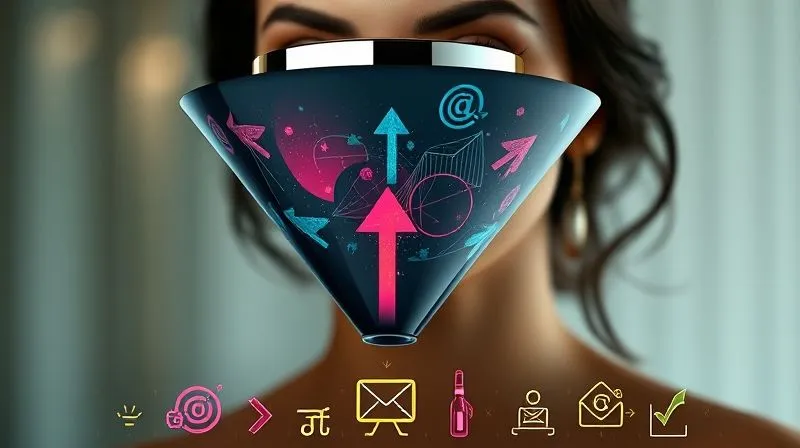
- Pixel Placement: Ensure your website has Facebook Pixel, Google Analytics tracking, and any other relevant advertising pixels installed. This allows you to build custom audiences of everyone who clicked an influencer's link or visited a specific product page.
- Segmented Retargeting Campaigns: Don't show generic ads. Create specific retargeting campaigns for those who interacted with influencer content. These ads can feature the same influencer, remind them of the discount code, or highlight product benefits relevant to their initial interest.
- Email Marketing Nurture Sequences: If you capture email addresses (e.g., through a pop-up offering an additional discount), build an email sequence that continues to educate, offer value, and gently nudge towards purchase. This can include product testimonials, ingredient deep-dives, or exclusive content.
- Abandoned Cart Recovery: For those who added items to their cart but didn't complete the purchase, implement automated abandoned cart emails. These are incredibly effective, often recovering a significant percentage of lost sales.
By treating influencer-driven traffic not just as a one-off opportunity but as a valuable lead generation source, you can significantly increase your overall conversion rates and unlock the full potential of your influencer marketing budget. This long-game approach is essential for sustainable growth.
Attribution Models and ROI: Proving the Value of Influencer Sales
The biggest challenge many brands face is definitively proving that influencer efforts lead to direct sales. Without a clear attribution model, it's impossible to optimize future campaigns or justify continued investment. As an expert, I've seen brands throw money at influencer marketing without truly understanding its financial return. Mastering attribution is how you answer 'how to convert beauty influencer content into direct sales?' with hard data.
Attribution models determine which touchpoint (or series of touchpoints) gets credit for a conversion. For influencer marketing, this can be complex, as a customer might see an influencer's post, then search for the product on Google, and finally purchase through a paid ad.
- Last-Click Attribution: This model gives 100% of the credit to the last touchpoint before conversion. While simple, it often undervalues earlier touchpoints like influencer content that initiated interest.
- First-Click Attribution: This model gives 100% credit to the very first touchpoint. This can be useful for understanding brand awareness, but might overstate the influencer's direct sales impact if other channels closed the deal.
- Linear Attribution: This model distributes credit equally across all touchpoints in the conversion path. It provides a more balanced view but can still be vague.
- Time Decay Attribution: Gives more credit to touchpoints closer in time to the conversion. This is often a good fit for influencer marketing, as the initial exposure might be further from the purchase.
- Data-Driven Attribution (Google Analytics 4): This advanced model uses machine learning to assign credit based on actual data from your account. It's often the most accurate but requires sufficient data volume.
I typically recommend a blended approach, using unique discount codes and trackable links for immediate, direct attribution (last-click data), combined with a multi-touch attribution model (like time decay or data-driven) to understand the influencer's role in the broader customer journey. Tools like Google Analytics and dedicated influencer marketing platforms can help with this. For a deeper dive into attribution, consider resources from Google Analytics support.
By meticulously tracking and attributing sales, you gain invaluable insights into which influencers, content formats, and CTAs are truly driving your bottom line. This data empowers you to optimize your strategy and continuously improve your ability to convert beauty influencer content into direct sales.
Building Long-Term Partnerships and Amplifying User-Generated Content
The most successful beauty brands I've worked with don't view influencer campaigns as one-off transactions. They cultivate long-term partnerships that transform influencers into genuine brand advocates. This sustained relationship is a powerhouse for consistent direct sales and brand loyalty.
When an influencer consistently promotes your products, their audience develops a deeper trust and familiarity. This repeated exposure and authentic endorsement significantly increase the likelihood of conversion over time. It’s not just about a single sale, but about creating a loyal customer base nurtured by a trusted voice.
- Foster Genuine Relationships: Treat influencers as partners, not just contractors. Provide exceptional support, early access to new products, and involve them in product development discussions.
- Multi-Campaign Contracts: Instead of single posts, negotiate contracts for a series of content pieces over several months. This allows for deeper storytelling and more consistent exposure.
- Performance-Based Incentives: Beyond a flat fee, offer commission structures or bonuses based on direct sales generated. This aligns your goals perfectly with the influencer's.
- Repurpose Influencer Content: With their permission, repurpose high-performing influencer content across your own social channels, website, and email marketing. This amplifies their message and provides valuable social proof.
Furthermore, actively encouraging and amplifying user-generated content (UGC) is a game-changer. When an influencer's followers see other real people using and loving your products, it creates a powerful ripple effect of social proof. This is crucial for how to convert beauty influencer content into direct sales through community building.
| Partnership Tier | Investment Level | Expected ROI | Benefit for Brand |
|---|---|---|---|
| Tier 1 (Micro/Mid-Tier) | Medium | High conversion rate, niche appeal | Authenticity, targeted reach |
| Tier 2 (Macro) | High | Broad reach, strong brand awareness | Mass exposure, brand credibility |
| Tier 3 (Brand Ambassador) | Ongoing | Sustained sales, deep loyalty | Consistent advocacy, exclusive content |
Frequently Asked Questions (FAQ)
Q: How do I choose the right influencer for sales conversion if I have a limited budget? Focus on micro and nano-influencers. They often have higher engagement rates and more dedicated, niche audiences who trust their recommendations deeply. Their authenticity can drive better conversion than a mega-influencer's broad reach, especially for direct sales, and they are typically more budget-friendly. Prioritize audience demographics and engagement over follower count.
Q: What's the best attribution model for influencer sales in a multi-channel strategy? While unique discount codes and affiliate links provide direct 'last-click' attribution, I recommend a multi-touch model like 'Time Decay' or 'Data-Driven Attribution' in Google Analytics 4. This acknowledges that influencer content often serves as an initial touchpoint that influences later conversions, giving a more holistic view of their impact on the entire customer journey, not just the final click.
Q: How can I handle low sales performance from an influencer campaign without damaging the relationship? Approach it with data and a focus on learning. Share the conversion data transparently, emphasizing that it's about optimizing future efforts, not blaming. Discuss what might have gone wrong (e.g., CTA clarity, product fit, audience reaction). Offer to collaborate on A/B testing different approaches for future campaigns or suggest re-evaluating the partnership fit for sales-focused goals. Maintain professionalism and a solution-oriented mindset.
Q: Can beauty influencers truly drive significant sales for high-ticket items? Yes, but it requires a different strategy. For high-ticket beauty products (e.g., advanced devices, luxury skincare), influencers need to provide in-depth reviews, long-term usage demonstrations, and detailed explanations of value. Trust and credibility are even more paramount. Consider live Q&A sessions, extended video reviews, and collaborations with experts or dermatologists to build the necessary authority and overcome the higher purchase barrier.
Q: Are there any legal considerations I need to be aware of when running direct sales influencer campaigns? Absolutely. Transparency is key. Influencers must clearly disclose their sponsored relationship with your brand (e.g., #ad, #sponsored, #partner) according to FTC guidelines in the US, ASA in the UK, or similar regulatory bodies in other regions. Failure to disclose can result in fines for both the influencer and the brand. Ensure your contracts explicitly state these disclosure requirements and provide clear examples for your influencers to follow.
Key Takeaways and Final Thoughts
- Strategic Selection is Paramount: Choose influencers based on audience alignment and conversion potential, not just follower count.
- Conversion-Centric Briefs: Equip influencers with clear sales goals, strong CTAs, and compelling product narratives.
- Seamless Purchase Path: Implement trackable discount codes, affiliate links, and optimize your website for mobile and speed.
- Retarget & Nurture: Leverage pixels and email marketing to re-engage interested but non-converting audiences.
- Measure & Attribute: Use appropriate attribution models to accurately track ROI and optimize future campaigns.
- Build Long-Term Partnerships: Foster genuine relationships and amplify user-generated content for sustained growth.
The journey to effectively convert beauty influencer content into direct sales is a strategic one, requiring a blend of art and science. It’s about moving beyond the superficial glamor of social media and focusing on the tangible outcomes that fuel your business. By implementing these expert-backed strategies, you're not just creating pretty content; you're building a powerful, measurable sales engine driven by authentic influence. Embrace the data, optimize relentlessly, and watch your beauty brand flourish.
Recommended Reading
- The Ultimate Guide: How to Care for Anti-Reflective Coating on Glasses
- 7 Steps: Predict Sunglasses Trends & Avoid Dead Stock Profitably
- Unlock Profit: How to Avoid Missing Crucial Fashion Trend Shifts?
- Sweaty Feet? Discover the Best Shoe Materials for Ultimate Comfort!
- How to Ethically Source Exotic Leather for Luxury Handbags: A 7-Step Guide


Your email address will not be published. Required fields are marked *