

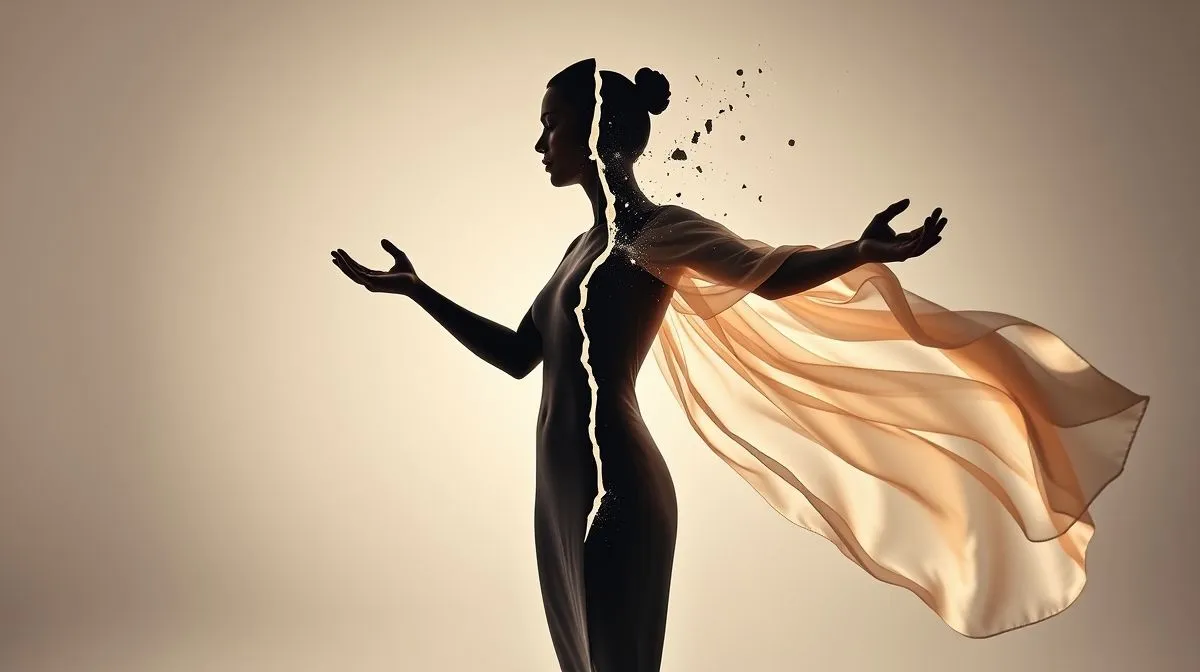
Why do my fashion model poses often look stiff or unnatural?
In my fifteen years behind the lens, few challenges are as persistent as the quest for natural, fluid poses. Many photographers, and indeed models, frequently ask: 'Why do my poses often look stiff or unnatural?' It's a fundamental question that cuts to the heart of authentic fashion imagery, and the answer isn't a single issue, but a confluence of factors.
A primary culprit, in my experience, is the model's tendency to consciously 'pose' rather than organically *feel* the moment. They often become overly analytical, trying to replicate a learned posture instead of letting the emotion or the garment guide their movement.
This overthinking invariably manifests as physical tension, particularly in the shoulders, neck, and hands. The body stiffens, muscles lock, and what should be a graceful line becomes a rigid, almost robotic, silhouette.
"Think of it like an actor delivering lines versus truly inhabiting a character. One recites, the other embodies. Natural posing demands embodiment, not recitation."
Another significant factor I've observed stems directly from the photographer's direction. Vague instructions like 'look natural' or 'just pose' leave models adrift, forcing them to guess what's expected, which in turn leads to uncertainty and stiffness.
Conversely, over-directing specific body parts – 'move your left finger up, now tilt your head exactly 3 degrees' – can be equally detrimental. This approach fragments the pose, preventing the model from finding a cohesive, comfortable flow.
I always advocate for directing emotion or narrative over anatomy. Instead of 'put your hand on your hip,' I might say, 'Imagine you've just heard surprising news, and you're contemplating it.' This gives the model a *reason* to move, fostering authenticity.
Physical discomfort is also a silent killer of natural poses. Models are often asked to hold challenging positions for extended periods, leading to strained muscles and visible unease, which the camera mercilessly captures.
Furthermore, the intense scrutiny of the camera can trigger profound self-consciousness. Models become acutely aware of every perceived flaw, tensing up as a defense mechanism, afraid of looking awkward or 'wrong.' This internal struggle is palpable in the final image.
Finally, a common oversight is neglecting the 'why' behind the pose. Fashion photography isn't just about showcasing clothes; it's about telling a story, evoking a mood, or conveying a lifestyle. When a pose lacks this underlying narrative, it becomes purely aesthetic and often hollow.
Without understanding the garment's essence – is it flowy and romantic, sharp and powerful, rebellious and edgy? – a model struggles to infuse the pose with appropriate energy. The disconnect between the model's expression and the fashion's intent results in a pose that feels generic and out of place.
Ultimately, stiffness arises when the model's physical presence, emotional state, and the narrative intent are out of sync. My goal as a photographer is always to bridge these gaps, transforming a static arrangement of limbs into a compelling, living image.
Can practicing dance or yoga improve my posing?
Absolutely, without a shadow of a doubt. In my fifteen years behind the lens, I've observed a profound correlation: models with a background in dance or yoga consistently exhibit a remarkable advantage in their posing abilities. These disciplines aren't just about physical fitness; they are intensive training in body intelligence, control, and expressive movement.
Consider the dancer. Their art is the mastery of movement, grace, and storytelling through the physical form. This translates directly into a model's ability to create compelling shapes and transitions. A dancer instinctively understands how to extend a limb, articulate a joint, or shift weight to achieve maximum aesthetic impact, creating fluidity that is simply captivating.
I often tell models to think of their body as a sculptor thinks of clay. A dancer has spent years learning the properties of that "clay"—how it can bend, stretch, and hold a form. This leads to an innate understanding of lines and angles, crucial for fashion photography where every curve and plane tells a story.
- Fluid Transitions: Moving seamlessly from one pose to the next, eliminating jerky adjustments.
- Dynamic Energy: Infusing poses with a sense of motion and life, even when static.
- Expressive Lines: Crafting elegant and impactful shapes with their entire body.
- Spatial Awareness: Understanding how their body occupies space and interacts with the environment.
Now, let's turn to yoga. While dance is about dynamic movement, yoga cultivates mind-body connection, stability, and sustained strength. The focus on breath work and holding challenging asanas (poses) for extended periods builds incredible core strength, balance, and the ability to maintain a serene expression even under physical strain.
A yogi understands alignment and how to ground themselves, making their poses look effortless and stable, not precarious. This internal calm and control are invaluable on a busy set, allowing a model to hold a complex pose for multiple takes without visible tension or fatigue.
- Sustained Poses: Holding complex positions comfortably and elegantly for longer durations.
- Inner Calm: Using breath to manage stress and maintain a composed expression.
- Impeccable Posture: A strong core and awareness of spinal alignment translates to powerful presence.
- Subtle Adjustments: The ability to make minute, precise changes to their body based on feedback.
The synergy between these two practices is where the real magic happens. Dance gives you the vocabulary of movement; yoga gives you the grammar of control and stillness. Together, they equip a model with an unparalleled understanding of their own physicality, turning them into a living canvas capable of nuanced expression.
In my experience, models who engage in these practices require significantly less verbal direction on set. They possess a heightened proprioception – an awareness of their body's position in space – that allows them to self-correct and explore variations intuitively. It's not just about looking good; it's about *feeling* the pose and projecting that authenticity.
So, my advice is not just to dabble, but to truly immerse yourself. Pay attention not just to the physical act of stretching or moving, but to how your body communicates, how your weight shifts, and how your breath influences your posture. Translate that internal awareness into your external presentation for the camera.
The goal isn't just to strike a pose; it's to embody a story, and both dance and yoga provide the profound language for that narrative.
Reading Recommendations:
- Unlock Comfort & Style: The Ultimate Guide to Wide Feet Shoe Trends
- Ultimate Guide: How to Style Fashion Lookbook Outfits
- Stunning Nail Art Ideas for Short Nails at Home: Your Ultimate Guide!
- Authenticate Vintage Designer Handbags: The Expert's Secret Guide
- Beat the Shine: The Ultimate Makeup Guide for Oily Skin This Summer
Key Points and Final Thoughts
Having spent over fifteen years behind the lens, guiding countless models from tentative stances to compelling, authentic expressions, I've come to understand that unlocking natural poses isn't about a magic trick; it's about fostering a profound connection and understanding. It's about shifting the paradigm from rigid instruction to fluid collaboration, where the model feels genuinely seen and encouraged to bring their unique energy to the frame.
In my experience, the most common pitfall I observe is an overemphasis on anatomical perfection rather than emotional resonance. We're not just arranging limbs; we're capturing a narrative. The photographer's role extends far beyond technical settings; it's about creating an atmosphere of trust and psychological safety where a model can truly let their guard down and move with innate grace.
A truly effective shoot, where natural poses flourish, often feels more like a dance than a static photo session. It demands constant, nuanced communication. Instead of simply saying, "Turn your head to the left," I often encourage models to "Feel the light on your cheek, let your gaze soften as if looking at a distant memory." This subtle shift in directive taps into their internal world, yielding far more organic results.
“The camera is not just an eye; it’s a mirror. It reflects the atmosphere we create, the trust we build, and the genuine emotion we allow to surface.”
Ultimately, the journey to natural posing is a shared one, a partnership between the artist and the muse. It requires patience, empathy, and a keen eye for the micro-expressions and subtle shifts in weight that communicate authenticity. For fashion photography, this authenticity is paramount; it's what makes an image memorable and, crucially, marketable.
Here are my final key takeaways for anyone striving to achieve truly natural poses:
- Prioritize Connection Over Perfection: Focus on building rapport and creating a comfortable environment. A relaxed model is a natural model.
- Guide, Don't Dictate: Use evocative language that encourages feeling and movement, rather than just anatomical adjustments. Think about the mood you want to convey.
- Embrace Imperfection: Natural often means slightly asymmetric, a little unpolished. These "flaws" are what give an image its unique character and relatability.
- Observe and Adapt: Pay close attention to the model's natural tendencies. Work *with* their strengths and comfort zones, rather than forcing them into preconceived shapes.
- Shoot in Bursts: Don't just take one shot. Capture sequences of movement. The magic often happens in the transitions between poses.
Remember, this isn't a destination, but a continuous practice. The more you hone your ability to see beyond the surface, to connect with your subjects on a deeper level, the more effortlessly natural and compelling your fashion photography will become. It's an investment in your craft that pays dividends in every single frame.


Your email address will not be published. Required fields are marked *